Today's
EarthStation1.com 15% Off Commemorative Memorial Title: Barnum's
Big Top: P. T. Barnum's Circuses + 2 Bonuses MP4 Download DVD
Today, April 17, 2026
April 17: World Circus Day: -- Created to
shine a spotlight on circus creators, performers, and artists. As
one of the most popular and universal forms of entertainment,
circus art is brought to the forefront to create awareness for
everyone involved in the industry. This day is dedicated to
emphasizing their craft, talents, and skills. It also helps them
raise funds, attract audiences, and enter the zeitgeist of the
entertainment scene. From veteran performers to up-and-coming
artists, this day is dedicated to their hard work and dedication.
Circus art is not as easy as it looks - it takes years of training
and perseverance to achieve mastery. Today, we celebrate them and
their contributions to the arts. While the origin of the circus
remains unclear, historians believe that the first circus acts
began in Ancient Rome. The circus is the first form of public
entertainment where men and women weren't separated. The Circus
Maximus was the first circus arena built in Ancient Rome, in the
Old Kingdom era. It could fit at least 250,000 spectators per
show. Some of the renowned circus arenas of the Roman era include
Circus Neronis, Circus Flaminius, and Circus of Maxentius. The
start of the modern circus era began in the 18th century when
Philip Astley opened an amphitheater in Lambeth, London. He
pioneered horse riding tricks as a form of entertainment in front
of a public audience. He initially called this performance arena
'Circle' but the term evolved and later on became prominently
known as 'Circus.' The first mainstream clown was Joseph Grimaldi
in 1781. He was well-known for his role as Little Clown in his
shows - "The Triumph of Mirth" or "Harlequin's
Wedding." Later on, Astley exported his circus to France and
was able to build 18 more all across Europe. The first modern
circus in the United States was founded by John Bill Ricketts on
April 3, 1793. Known as the Circus of Pepin and Breschard, his
circus group traveled from Montreal to Havana in the early 19th
century. Joshua Purdy was the first one to introduce a large tent
as a staple venue for circus acts in 1835. It was brought to
England by Thomas Taplin Cooke in 1835, since it was a lot more
practical, flexible, and allowed audiences to gather in a
wide-open space. Contemporary circuses skyrocketed in the 1970s
all across Australia, Canada, France, and the United Kingdom. This
type of circus combined theater, stunts, and traditional circus
acts to tell a story. This heavily influenced the circus we all
know today. But it was in 2010 when Princess Stephanie of Monaco
publicized the art of circus as a shared cultural heritage,
declaring April 17 as World Circus Day. On Sale @ 15% Off Discount
Till Midnight PT!
https://store.earthstation1.com/barnum39s-big-top-dvd-p-t-barnum-and-his-circuses-dvd-mp4-394.html
Today's
EarthStation1.com 15% Off Commemorative Memorial Title: And Away
We Go! US Cars + Bonus Internal Combusion Engine MP4 DVD
Today, April 17, 2026
April 17: Ford Mustang Day: -- A special
day to all automobile enthusiasts as it celebrates the most
successful sports car. Yes, we are talking about the classic Ford
Mustang. Powered by a robust engine and luring car lovers with its
sleek design, this Pony car is one of a kind. Ever since the car
turned 50, the idea of fans and Mustang owners getting out on the
streets to demonstrate their love for this vehicle has become a
global phenomenon. Every year, Mustang lovers participate in club
activities and attend demonstrative rallies to observe this day.
Ford Mustang Day marks the anniversary of the Mustang's
introduction to the world at the New York World Fair in 1964.
There are many reasons why the Mustang has a legendary reputation.
Its surprise appearance in the best cinema car chase of all time
alongside Steve McQueen continues to be the crowning moment for
this stallion. Interestingly, the name "Mustang" was not
the first choice. The design and marketing teams battled around
various other potential names like Cougar, Torino, Stiletto,
Panther, Comet, and many more. Ford's executive stylist, John
Najjar, suggested the name "Mustang" after the P-51
Mustang, a fighter plane used in World War II. Most of his team
members did not approve of his idea. Eventually, they decided to
drop the P-51 and stick with Mustang in tribute to a particular
breed of horse. Although it is still not certain whether the car
is named after a horse, its unique horse logo testifies to the
fact. The logo led to the creation of a new motoring category
altogether - "The Pony Club." There have been several
transformations and remodeling that went into the Pony machine
since its arrival. The Pony is currently running its sixth
generation. This consistent production is no less than a feat. The
only time Ford discontinued a model was the convertible in 1973.
But it did make a comeback ten years later, in 1983. The brand
never fails to set and break its records. In 2007, Ford came up
with another new edition known as "Warriors in Pink." It
featured pink interior stitching and pink rocker tape striping in
alliance with the Susan G. Komen Breast Cancer Foundation. So far,
the company has raised 120M USD to support this cause and provide
aid to the victims. On Sale @ 15% Off Discount Till Midnight PT!
https://store.earthstation1.com/and-away-we-go-american-automobile-history-dvd.html
Today's
EarthStation1.com 15% Off Commemorative Memorial Title: The Divine
Garbo: Greta Garbo Biography DVD, Download, USB Flash Drive
Today, April 17, 2026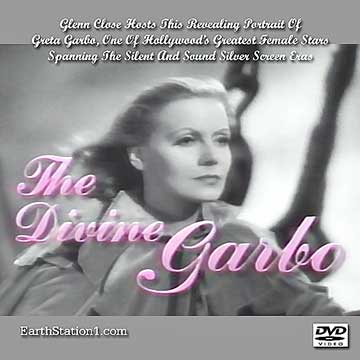
April 17: There's Nothing Like A Dame
Day: -- Created to honor the women of the theater and films. The
idea was further popularized when veteran actresses Dames Eileen
Atkins, Judi Dench, Joan Plowright, and Maggie Smith came together
for the documentary "There's Nothing Like a Dame." We
are here to show you how you can celebrate the day in the best way
possible and tell you how the term 'Dame' has changed over the
years. It went from being a female ruler to something that
referred to all women. In the U.K., a Dame is a woman who has been
honored for her work for a long time. In the fourteenth century,
the title 'Dame' was a sign of honor to women. In places like the
U.K., Australia, and New Zealand, 'Dame' was the feminine
counterpart of 'Sir,' which was for men. The chivalric order, 'The
Order of Ermine,' was the first to recognize women. There were
many notable women knights throughout the Middle Ages. Previously,
the term 'Dame' referred to the wife of a knight. In the
seventeenth century, it was replaced by 'Lady.' In the twentieth
century, the term 'dame' referred to all women. In 1932, the film
"Dames," a musical comedy, was released. It had many
popular dance numbers like "The Girl at the Ironing Board"
and "Try to See It My Way." In 1949, "South
Pacific," a musical, came out. It featured the song "There's
Nothing Like a Dame," in which seven sailors sang, longing
for women in their lives. In 2018, British theater and television
director Roger Michell made the film documentary "Nothing
Like a Dame Day," which starred actresses of yesteryears like
Judy Dench, Joan Plowright, and Maggie Smith. The documentary shed
light on these women's lives and how theater and cinema changed
over the years. In the U.S., the documentary went by "Tea
With The Dames." On Sale @ 15% Off Discount Till Midnight PT!
https://store.earthstation1.com/the-divine-garbo-greta-garbo-biography-dvd-video-download-usb-drive.html
Today's
EarthStation1.com 15% Off Commemorative Memorial Title:
Immigration To The United States Documentaries DVD, MP4, USB Drive
Today, April 17, 2026
April 17: National Ellis Island Family
History Day: -- A day which encourages families to explore their
ancestry and discover family who immigrated through Ellis Island,
at one time the busiest immigration inspection station in the
United States. On this date in 1907, officials recorded 11,747
names passing through Ellis Island. It was the busiest day of
immigration in the station's history; during all of 1907,
officials processed over one million immigrants through Ellis
Island. On April 17, 2001, Ellis Island documents become digitally
accessible to the general public. This project enabled millions of
families to finally retrace their ancestors' footsteps in a way
they had never been able to do before. Accordingly, governors
across the United States thereafter officially declared the
observance of National Ellise Island Family History Day to be
celebrated on April 17th annually. From 1892 to 1924, millions of
immigrants to the United States passed through the Ellis Island
inspection station. During its operation, approximately 12 million
immigrants passed through the halls of Ellis Island. It operated
from 1892 to 1954. Before Ellis Island, immigrants entered the
United States in New York City at Castle Garden. Just months
before Ellis Island's opening, the old depot was demolished and
ushered in a new era of immigration. The Statue Of Liberty
overlooks Ellis Island and was one of the first sights the nearly
2,000 immigrants a day would see as they disembarked. The new
facilities offered an improvement over the Castle Garden. The
large, open, and airy facility presented an overwhelming obstacle
to some, though. Thousands of people from many cultures and
speaking different languages gathered in one place. After such a
long journey, the arrival at Ellis Island must have been stressful
and confusing. For some, they entered Ellis Island as a step
toward their future. Officials turned others away for a variety of
reasons. If you have a family member who immigrated through Ellis
Island, you can celebrate the day by exploring your ancestry and
following your ancestors' footsteps. Discover the history behind
your family's name or learn about their experiences as they
traveled to a new land. Many documents reveal glimpses into their
lives and their reasons for immigrating. To observe National Ellis
Island Family History Day, use #EllisIslandFamilyHistoryDay to
post on social media. Through its website, ellisisland.org, you
explore the histories of famous immigrants. You can also search
passenger lists and follow the clues to your family's past. While
you research, take a virtual tour or learn genealogy basics. On
Sale @ 15% Off Discount Till Midnight PT!
https://store.earthstation1.com/immigration-to-the-united-states-dvd.html
Today's
EarthStation1.com 15% Off Commemorative Memorial Title: The
Western Tradition TV Series DVD, MP4 Video Download, USB Drive
Today, April 17, 2026
April 17, 1397: The History Of
Literature: The History Of English Literature: Geoffrey Chaucer:
The Canterbury Tales: -- Geoffrey Chaucer tells The Canterbury
Tales for the first time at the court of Richard II of England.
Chaucer scholars have also identified this date (in 1387) as the
start of the book's pilgrimage to Canterbury. The Canterbury Tales
(Middle English: Tales Of Caunterbury) is a collection of
twenty-four stories that runs to over 17,000 lines written in
Middle English by Geoffrey Chaucer between 1387 and 1400. It is
widely regarded as Chaucer's magnum opus. The tales (mostly
written in verse, although some are in prose) are presented as
part of a story-telling contest by a group of pilgrims as they
travel together from London to Canterbury to visit the shrine of
Saint Thomas Becket at Canterbury Cathedral. The prize for this
contest is a free meal at the Tabard Inn at Southwark on their
return. It has been suggested that the greatest contribution of
The Canterbury Tales to English literature was the popularisation
of the English vernacular in mainstream literature, as opposed to
French, Italian or Latin. English had, however, been used as a
literary language centuries before Chaucer's time, and several of
Chaucer's contemporaries-John Gower, William Langland, the Pearl
Poet, and Julian of Norwich-also wrote major literary works in
English. It is unclear to what extent Chaucer was seminal in this
evolution of literary preference. The Canterbury Tales is
generally thought to have been incomplete at the end of Chaucer's
life. In the General Prologue, some 30 pilgrims are introduced.
According to the Prologue, Chaucer's intention was to write four
stories from the perspective of each pilgrim, two each on the way
to and from their ultimate destination, St. Thomas Becket's shrine
(making for a total of about 120 stories). Although perhaps
incomplete, The Canterbury Tales is revered as one of the most
important works in English literature. On Sale @ 15% Off Discount
Till Midnight PT!
https://store.earthstation1.com/the-western-tradition-dvd-set-all-52-shows-13-d5213.html
Today's
EarthStation1.com 15% Off Commemorative Memorial Title: Triumph Of
The West 13 Part TV Documentary Series DVD, Download, USB
Today, April 17, 2026
April 17, 1521: The History Of
Christianity: The Reformation (The Protestant Reformation, The
European Reformation): The Diet Of Worms Of 1521: -- The trial of
Martin Luther over his teachings begins. Initially intimidated, he
asks for time to reflect before answering and is given a stay of
one day. The Diet Of Worms Of 1521 (German: Reichstag Zu Worms,
"Parliament Of Worms") was an imperial diet (a formal
deliberative assembly) of the Holy Roman Empire (modern Germany)
called by Emperor Charles V and conducted in the Imperial Free
City of Worms. Martin Luther was summoned to the Diet in order to
renounce or reaffirm his views in response to a Papal bull of Pope
Leo X. In answer to questioning, he defended these views and
refused to recant them. At the end of the Diet, the Emperor issued
the Edict of Worms (Wormser Edikt), a decree which condemned
Luther as "a notorious heretic" and banned citizens of
the Empire from propagating his ideas. Although the Protestant
Reformation is usually considered to have begun in 1517, the edict
signals the first overt schism. The diet was conducted from
January 28 to May 25, 1521 at the Heylshof Garden, with the
Emperor presiding. Other imperial diets had taken place at Worms
in the years 829, 926, 1076, 1122, 1495, and 1545, but unless
plainly qualified, the term "Diet Of Worms" usually
refers to the assembly of 1521. On Sale @ 15% Off Discount Till
Midnight PT!
https://store.earthstation1.com/triumph-of-the-west-tv-series-5-dual-layer-dvds-all-13-sh513.html
Today's
EarthStation1.com 15% Off Commemorative Memorial Title: Columbus &
The Age Of Discovery TV Series + Bonus MP4 Download DVD Set
Today, April 17, 2026
April 17, 1524: The Age Of Discovery (The
Age Of Exploration): Giovanni da Verrazzano's 1522-24 Voyage To
North America: The Discovery Of New York Bay: -- Giovanni da
Verrazzano (often misspelled Verrazano in English), Florentine
explorer of North America, in the service of King Francis I of
France, becomes the first European to discover New York Bay when
his three-masted sailing vessel La Dauphine (French: "The
[feminine] Dolphin", i.e. the wife of the crown prince) sails
into Upper New York Harbor. He mistakenly believed it to be a
large lake, rather than the entrance to the Hudson River. There he
was met by 30 canoes of the Lenape people (also called the Lenni
Lenape and Delaware People), the Indigenous people of the
Northeastern Woodlands of what is now The United States and
Canada. He gave it the name of New Angouleme (French: La
Nouvelle-Angouleme) in honor of King Francis I, who had been Count
Of Angouleme from 1496 until his coronation in 1515. The name
refers to the town of Angouleme, in the Charente departement of
France. On Sale @ 15% Off Discount Till Midnight PT!
https://store.earthstation1.com/columbus-and-the-age-of-discovery-epic-7-hourlong-episode-tv-serie7.html
Today's
EarthStation1.com 15% Off Commemorative Memorial Title: A Moment
In Time (1976) Film History DVD, Video Download, USB Drive
Today, April 17, 2026
April 17, 1837: #BOTD: J. P. Morgan,
American financier and banker who dominated corporate finance and
industrial consolidation in the United States of America in the
late 19th and early 20th centuries (d. March 31, 1913) is #born
John Pierpont Morgan in Hartford, Connecticut to Junius Spencer
Morgan (1813-1890) and Juliet Pierpont (1816-1884) of the
influential Morgan family. John Pierpont Morgan Sr. arranged the
merger of Edison General Electric and Thomson-Houston Electric
Company in 1892 to form General Electric. He also played important
roles in the formation of the United States Steel Corporation,
International Harvester and ATAmpersandT. At the height of
Morgan's career during the early twentieth century, he and his
partners had financial investments in many large corporations and
had significant influence over the nation's high finance and
United States Congress members. He directed the banking coalition
that stopped the Panic of 1907. He was the leading financier of
the Progressive Era, and his dedication to efficiency and
modernization helped transform American business. Adrian
Wooldridge characterized Morgan as America's "greatest
banker". Morgan died in Rome, Italy, in his sleep in 1913 at
the age of 75, leaving his fortune and business to his son, John
Pierpont Morgan Jr. Biographer Ron Chernow estimated his fortune
at "only" 80M USD, prompting John D. Rockefeller to say:
"and to think, he wasn't even a rich man.". On Sale @
15% Off Discount Till Midnight PT!
https://store.earthstation1.com/a-moment-in-time-dvd-film-history-narrated-by-gordon-parks.html
Today's
EarthStation1.com 15% Off Commemorative Memorial Title: Overlords
Of The U.F.O. (1976) MP4 Video Download DVD
Today, April 17, 2026
April 17, 1891: #BOTD: #HBD! George Adamski, Polish-American ufologist and author (d. April 23, 1965) is #born in Bromberg in the Kingdom Of Prussia, German Empire. He became widely known in ufology circles, and to some degree in popular culture, after he claimed to have photographed spaceships from other planets, met with friendly Nordic alien Space Brothers, and to have taken flights with them to the Moon and other planets. He was the first, and most famous, of the so-called contactees of the 1950s. Adamski called himself a "philosopher, teacher, student and saucer researcher", although most investigators concluded his claims were an elaborate hoax, and that Adamski himself was a con artist. Adamski authored three books describing his meetings with Nordic aliens and his travels with them aboard their spaceships: Flying Saucers Have Landed (co-written with Desmond Leslie) in 1953, Inside the Space Ships in 1955, and Flying Saucers Farewell in 1961. The first two books were both bestsellers; by 1960 they had sold a combined 200,000 copies. George Adamski died at the age of 74 of a heart attack at a friend's home in Silver Spring, Maryland, after giving a UFO lecture in Washington, DC. He is buried in Arlington National Cemetery. On Sale @ 15% Off Discount Till Midnight PT! https://store.earthstation1.com/overlords-of-the-ufo-dvd.html
Today's
EarthStation1.com 15% Off Commemorative Memorial Title: Calling
America: Axis WW2 Radio Propaganda MP3 CD Download USB Drive
Today, April 17, 2026
April 17, 1894: #BOTD: Herbert John
Burgman, American broadcaster of Nazi propaganda during World War
II, broadcaster for "Radio Debunk", self-described as
"The Voice Of All Free America" under the pseudonym of
Joe Scanlon, convicted of treason in 1949 and sentenced to six to
20 years in prison (d. December 16, 1953) is #born in Hokah,
Minnesota, the son of Gustave and Karoline (nee Dahlke) Burgman.
He served with the U.S. Army from 1918 to 1920. Burgman was posted
to Germany and served in the American zone in the Occupation of
the Rhineland. In 1921, he joined the State Department in Berlin
and worked as a clerk and economic statistician in the U.S.
embassy to Germany. Burgman married a German national, Johanna
Karhl, in 1924. Their son was born in 1925. By 1941, he was a
committed Nazi sympathizer and when Germany declared war on
America on December 11, 1941, he chose to remain in Germany rather
than return to the U.S. with the repatriation of the embassy
staff. In his broadcasts, Burgman attempted to persuade American
listeners that prostitution and sexually transmitted diseases were
widespread in the U.S. Army stationed overseas and that Britain
and the Soviet Union were in collusion against the United States.
He blamed Franklin D. Roosevelt and "his Jewish and
Communistic pals" for the war. Burgman was arrested by
American soldiers at his home in Rumpenheim, Frankfurt in November
1945. He was held in detention along with Mildred Gillars and
Donald S. Day by the Counterintelligence Corps at Camp King,
Oberursel, until his conditional release on December 24, 1946. He
was required to report regularly to U.S. Military Police who then
employed him as an interpreter even though he had been assessed as
mentally incompetent by U.S. Army psychiatrists. Burgman was
rearrested on the instructions of the Justice Department on
November 22, 1948, and returned to military custody in Frankfurt.
He was returned to the United States on February 4, 1949, to face
trial for treason. On April 1, 1949, Burgman was arraigned on 69
counts of treason at the Washington U.S. District Court. On May 9,
1949, Judge Henry A. Schweinhaut ordered that a new mental
examination should be made. This time, he was assessed as mentally
competent and his trial began on October 11, 1949, with the
original 69 counts of treason being reduced to 20. The prosecution
relied on the many broadcasts featuring Burgman recorded by the
Federal Communications Commission stationed in Silver Hill,
Maryland to show his active participation in propaganda activities
against the United States and eyewitness evidence of him
broadcasting for the enemy. He admitted broadcasting wartime
propaganda for the Germans, but his defense contended that he was
insane when doing so. It was also argued that he had made his
broadcasts in fear of the Gestapo. Burgman suffered a heart attack
during his trial and appeared in a wheelchair at some of the
proceedings. He was convicted of 13 acts of treason on November
15, 1949. A motion for a new trial was denied on December 15,
1949, and five days later, on December 20, 1949, Judge Alexander
Holtzoff sentenced Burgman to imprisonment for 6 to 20 years. On
February 8, 1951, the use of electrical transcriptions of his
wartime broadcasts in his treason trial was upheld by the U.S.
Court of Appeals. Burgman served his prison sentence at the
federal prison in Lewisburg, Pennsylvania. Herbert John Burgman
died of acute pulmonary edema due to heart disease at the age of
59. Burgman died on the first anniversary of the death of fellow
Nazi propagandist Robert Henry Best, who had died in the same
prison. Burgman is interred in the Oakwood Cemetery in Austin,
Minnesota. On Sale @ 15% Off Discount Till Midnight PT!
https://store.earthstation1.com/calling-america-axis-ww2-radio-propaganda-mp3-23.html
Today's
EarthStation1.com 15% Off Commemorative Memorial Title: The Genius
That Was China Documentary Series DVD, Download, USB Drive
Today, April 17, 2026
April 17, 1895: The Century Of
Humiliation (The Hundred Years Of National Humiliation)
(1838-1945): The Sino-Japanese Wars: The First Sino-Japanese War:
The Treaty of Shimonoseki (Japanese: Shimonoseki Joyaku) (The
Treaty Of Maguan [Chinese: Maguan Tiaoyue], The Treaty Of Bakan
(Japanese: Bakan Joyaku): -- The First Sino-Japanese War ends with
the signing of The Treaty of Shimonoseki by the Qing Empire of
China and the Empire Of Japan at the Shunpanro Hotel in
Shimonoseki, Japan at the end of a peace conference that had begun
on March 20. According to the terms of the treaty, the defeated
Qing Empire was forced to renounce its claims on Korea, and to
concede the southern portion of the Fengtien province, Taiwan and
the Pescadores Islands to Japan. This treaty followed and
superseded the Sino-Japanese Friendship And Trade Treaty of 1871.
On Sale @ 15% Off Discount Till Midnight PT!
https://store.earthstation1.com/the-genius-that-was-china-dvd-tv-documentary-series-2-disc-se2.html
Today's
EarthStation1.com 15% Off Commemorative Memorial Title: UFO MP3s
Collection: Alien Phenomena CD, MP3 Download, USB Drive
Today, April 17, 2026
April 17, 1897: UFO Incidents
(Unidentified Flying Object Incidents): The Aurora, Texas, UFO
Incident: -- As reported in an article published in the Dallas
Morning News written by S.E. Haydon published two days later on
April 19, 1897, an Unidentified Flying Object (UFO) crashes into a
windmill "with a terrific explosion" on a farm owned by
Judge J.S. Proctor two days earlier at around 6am local (Central)
time near Aurora, Texas. The article went on to report that the
pilot, who was "not an inhabitant of this world" and was
in the opinion of Army Signal Service officer T.J. Weems "a
native of the planet Mars", did not survive the crash, was
found to have documents "written in some form of
hieroglyphics", and was to be buried the day after the
article was published. The article further states "The ship
was too badly damaged to form any conclusion as to the
construction or motive power. It was built of an unknown metal,
resembling somewhat a mixture of aluminum and silver... The town
is full of people to-day who are viewing the wreck and gathering
specimens of strange metal from the debris...". After the
article's publication, the pilot was indeed buried at the nearby
Aurora Cemetery, along with some of the wreckage of the crash. A
stone placed as a marker on the grave was later removed; the
cemetery currently contains a Texas Historical Commission marker
mentioning the incident. The remaining wreckage from the crash
site, which debris was scattered over several acres, was dumped
into a well located under the damaged windmill. The property was
sold around 1935 to Mr. Brawley Oates, who cleaned out the debris
from the well in order to use it as a water source. He later
developed an extremely severe case of arthritis, which he claimed
to be the result of contaminated water from the wreckage dumped
into the well. As a result, Oates sealed up the well with a
concrete slab and placed an outbuilding atop the slab which,
according to writing on the slab, was done in 1945. The Aurora,
Texas, UFO Incident has many similarities to the more famous
Roswell UFO Incident that occured 50 years later, and was referred
to in an Above Top Secret briefing that General George Marshall
gave to President Truman immediately after the Roswell crash. On
Sale @ 15% Off Discount Till Midnight PT!
https://store.earthstation1.com/ufo-mp3s-tv-radio-and-audio-recordings-mp3-33.html
Today's
EarthStation1.com 15% Off Commemorative Memorial Title: The Proud
And Profane 1956 William Holden Deborh Kerr DVD Download USB
Today, April 17, 2026
April 17, 1918: #BOTD: #HBD! William
Holden, American actor, one of the biggest box-office draws of the
1950s (d. November 12, 1981) is #born William Franklin Beedle Jr.
in O'Fallon, Illinois. William Holden won the Oscar for Best Actor
for the film Stalag 17 (1953), and a Primetime Emmy Award for
Outstanding Lead Actor in a Limited Series or Movie for the
television film The Blue Knight (1973). Holden starred in some of
Hollywood's most popular and critically acclaimed films, including
Sunset Boulevard, Sabrina, The Bridge on the River Kwai, The Wild
Bunch, Picnic, and Network. He was named one of the "Top 10
Stars of the Year" six times (1954-1958, 1961), and appeared
as 25th on the American Film Institute's list of 25 greatest male
stars of Classic Hollywood Cinema. William Holden died when he
bleds to death at age 63 in his apartment in Santa Monica,
California after lacerating his forehead from slipping on a rug
while intoxicated and hitting a bedside table. Forensic evidence
recovered at the scene suggested that he was conscious for at
least half an hour after the fall. The causes of death were given
as "exsanguination" and "blunt laceration of
scalp." Rumors existed that he was suffering from lung
cancer, which Holden had denied at a 1980 press conference. His
death certificate makes no mention of cancer. He dictated in his
will that the Neptune Society cremate him and scatter his ashes in
the Pacific Ocean. In accordance with his wishes, no funeral or
memorial services were conducted. President Ronald Reagan released
a statement: "I have a great feeling of grief. We were close
friends for many years. What do you say about a longtime friend -
a sense of personal loss, a fine man. Our friendship never waned."
On Sale @ 15% Off Discount Till Midnight PT!
https://store.earthstation1.com/the-proud-and-profane-1956-dvd-william-holden-deborah-1956.html
Today's
EarthStation1.com 15% Off Commemorative Memorial Title: The Hippie
Temptation (1967) w/ Harry Reasoner DVD, MP4, USB Stick
Today, April 17, 2026
April 17, 1923: #BOTD: #HBD! Harry
Reasoner, American soldier and journalist for ABC and CBS News,
known for his inventive use of language as a television
commentator and as a founder of the 60 Minutes program (d. August
6, 1991) is #born on First Street North in Dakota City, Iowa. Over
the course of his career, Harry Truman Reasoner won three Emmy
Awards and a George Foster Peabody Award in 1967. 60 Minutes is an
American newsmagazine television program broadcast on the CBS
television network. Debuting in 1968, the program was created by
Don Hewitt, who chose to set it apart from other news programs by
using a unique style of reporter-centered investigation. In 2002,
60 Minutes was ranked #6 on TV Guide's 50 Greatest TV Shows of All
Time and in 2013, it was ranked #24 on TV Guide's 60 Best Series
of All Time. The New York Times has called it "one of the
most esteemed news magazines on American television". Season
50 debuted on September 24, 2017. It has been renewed for a record
51st season. Harry Reasoner died within three months of his
retirement in 1991 from a blood clot in the brain, resulting from
a fall at his home in Westport, Connecticut, aged 68. He is
interred at Union Cemetery in Humboldt, Iowa. On Sale @ 15% Off
Discount Till Midnight PT!
https://store.earthstation1.com/the-hippie-temptation-dvd-1967-harry-reasoner-cbs-tv-documen1967.html
Today's
EarthStation1.com 15% Off Commemorative Memorial Title: 33 1/3
Revolutions Per Monkee (1969) The Monkees DVD MP4 Download USB
Today, April 17, 2026
April 17, 1934: #BOTD: #HBD! Don
Kirshner, American impresario, songwriter and producer (d. January
17, 2011) is #born Donald Clark Kirshner into a Jewish family in
the Bronx, New York. Once described by Time Magazine as The Man
With the Golden Ear, was an American music publisher, rock music
producer, talent manager, and songwriter. He was best known for
managing songwriting talent as well as successful pop groups, such
as the Monkees, Kansas, and the Archies. He graduated from George
Washington High School in Manhattan, and went on to study at
Upsala College in East Orange, New Jersey. After graduation he
went to work for Vanderbilt Music, a small music publishing
company owned by former Tin Pan Alley lyricist Al Lewis. Kirshner
brought Lewis together with Sylvester Bradford, an
African-American songwriter. Lewis and Bradford wrote "Tears
on My Pillow", which was a big hit for Little Anthony and the
Imperials in 1958. Kirshner achieved his first major success in
the late 1950s and early 1960s as co-owner of the influential New
York-based publishing company Aldon Music with partner Al Nevins,
which had under contract at various times several of the most
important songwriters of the so-called "Brill Building"
school, including Carole King, Gerry Goffin, Neil Sedaka, Neil
Diamond, Paul Simon, Phil Spector, Howard Greenfield, Barry Mann,
Cynthia Weil, Tony Orlando, and Jack Keller. As a
producer-promoter, Kirshner was instrumental in launching the
careers of singers and songwriters, including Bobby Darin, with
whom he collaborated on a number of advertising jingles and pop
"ditties" - their first was called "Bubblegum Pop".
He was also responsible for finding Tony Orlando, Neil Diamond,
Carole King, and Sarah Dash of Labelle, as well as discovering the
occasional rock act, such as Kansas. Kirshner had three record
labels. The first was Chairman Records, a subsidiary of London
Records. Although he was responsible for scores of hits in the
1960s, he was only to have one on the Chairman label - 1963's
"Martian Hop" by The Ran-Dells - which reached number 16
nationally. Kirshner later had two other record labels: Calendar
Records, which had early hits by the Archies, and later morphed
into the Kirshner label, which had later hits by the Archies and
Kansas. Calendar/Kirshner recordings were first distributed by RCA
Records, then CBS Records. Kirshner was also involved in Dimension
Records. In the early 1960s, Kirshner was a successful music
publisher as head of his own company, Aldon Music, which later was
sold to Screen Gems-Columbia Music. With Al Nevins, Kirshner
brought performers such as Bobby Darin together with songwriters
and musicians. He later became president of COLGEMS, a subsidiary
of the COLPIX label, in 1966. Kirshner was hired by the producers
of The Monkees to provide hit-worthy songs to accompany the
television program, within a demanding schedule. Kirshner used
songwriting talent from his Brill Building stable of writers and
musicians to create catchy, engaging tracks which the band could
pretend to perform on the show. This was required to keep up with
the demanding schedule. The formula worked phenomenally well - the
singles "Last Train to Clarksville", written by Tommy
Boyce and Bobby Hart, and "I'm a Believer", written by
Neil Diamond, were, along with the first two Monkees albums,
produced and released in time to catch the initial wave of the
television program's popularity. After a year, the Monkees wanted
a chance to play their own instruments on the records. They also
wanted more control over which songs would be released as singles.
The matter reached a breaking point over a disagreement regarding
the Neil Diamond-penned "A Little Bit Me, A Little Bit You"
in early 1967. The song's release by Kirshner as a single, without
Columbia Pictures' consent, led to his dismissal. Kirshner's later
venture was the Archies, an animated series where there were only
studio musicians to be managed. Kirshner was a music consultant or
music supervisor for nearly two dozen TV series between 1966 and
1977, such as Bewitched. One instance brought Phil Spector, Tommy
Boyce and Bobby Hart together on the TV show I Dream of Jeannie, a
program on which Don Kirshner was credited as music consultant for
35 episodes from 1966 to 1967. From 1970 to 1979, Kirshner served
as producer or executive producer for a number of made for TV
movies, TV specials, and TV series. One of those series was the
musical game show Musical Chairs, notable for being the first game
show hosted by an African-American, Adam Wade. In the fall of
1972, Kirshner was asked by ABC Television to serve as executive
producer and "creative consultant" for their new In
Concert series, which aired every other week in the 11:30 p.m.
slot normally showing The Dick Cavett Show. The following
September, Kirshner left In Concert to produce and host his own
syndicated weekly rock-concert program called Don Kirshner's Rock
Concert. With its long-form live performances, it was a new
direction for pop music presentation on television as compared to
rehearsed, often lip-synced performances that were the staple of
earlier television shows like Shindig!. The last show aired in
1981, the year that MTV was launched. The program presented many
of the most successful bands of the era, usually rock and roll but
occasionally from other genres, each time introduced by Kirshner's
trademark monotone delivery as the program host. In its final
season, Rock Concert was mostly hosted by Kirshner's son and
daughter, whose delivery was similar as their father's. Kirshner's
"wooden" presentation style was later lampooned on
Saturday Night Live by Paul Shaffer, most notably in Shaffer's
introduction of the Blues Brothers during the duo's television
debut. Shaffer and Kirshner worked together on the short-lived
situation comedy, A Year at the Top, which Kirshner co-produced
with Norman Lear, and in which Shaffer starred. Kirshner received
the 2007 Songwriters Hall of Fame Abe Olman Publishing Award. He
was a creative consultant for Rockrena, a company founded by Jack
Wishna, and launched in 2011 to promote new music talent online.
He died of heart failure in a Boca Raton, Florida hospital on
January 17, 2011, at age 76, survived by his wife of 50 years,
Sheila; his son, Ricky Kirshner; daughter, Daryn Lewis; and five
grandchildren. He is buried at Temple Beth El Mausoleum in Boca
Raton. On April 14, 2012, Don Kirshner was posthumously inducted
into The Rock And Roll Hall Of Fame. On Sale @ 15% Off Discount
Till Midnight PT!
https://store.earthstation1.com/33-13-revolutions-per-monkee-dvd-1969-tv33131969.html
Today's
EarthStation1.com 15% Off Commemorative Memorial Title: Ratlines
WWII Escape Routes For Fascist War Criminals MP4 Download DVD
Today, April 17, 2026
April 17, 1941: World War II: The
European Civil War: The Second European War (The European Theater
Of World War II): The Mediterranean And Middle East Theater Of
World War II: The Balkans Campaign (World War II): The Invasion Of
Yugoslavia (The April War, Operation 25): -- The Kingdom of
Yugoslavia surrenders when it signs an armistice with Germany and
Italy, after only eleven days of fighting. It came into effect the
following day at noon. Scholars have proposed a number of theories
for the Royal Yugoslav Army's sudden collapse, including poor
training and equipment, lack of leadership, generals eager to
secure a quick cessation of hostilities, the army's subpar
equipment and outdated tactical and strategical techniques, and a
sizeable Croatian, Slovenian and German fifth column. Many Serbian
nationalists blamed the loss on fifth columnist Croats who stood
to gain from Italian and German rule, ignoring the primary failure
of the Yugoslav Army and its almost entirely Serbian leadership.
Many Croatian nationalists blamed Belgrade politicians and the
inadequacy of the Serbian-dominated army. Others state that the
fifth column had little effect on the ultimate outcome of the
invasion, and that the insistence of the Yugoslav Army on
defending all the borders assured its failure from the start.
After the surrender, Yugoslavia was subsequently divided amongst
Germany, Hungary, Italy and Bulgaria. Germany took control of most
of Serbia. Although Ante Pavelic, leader of the fascist Ustase,
declared an Independent State Of Croatia before the invasion was
even over, Croatia was actually under the joint control of Germany
and Italy. On Sale @ 15% Off Discount Till Midnight PT!
https://store.earthstation1.com/ratlines-wwii-escape-routes-for-fascist-war-criminals-mp4-download-dvd.html
Today's
EarthStation1.com 15% Off Commemorative Memorial Title: Ike: The
War Years Complete 2 Part TV Miniseries DVD, MP4, USB Drive
Today, April 17, 2026
April 17, 1942: The European Civil War:
World War II: The Second European War (The European Theater Of
World War II): Prisoner Of War Escapes: The Excape Of Henri
Giraud: -- French prisoner of war General Henri Giraud (January 18
1879 - March 11, 1949) escapes from his castle prison in
Konigstein Fortress. When World War II began, Giraud was a member
of the Superior War Council, and disagreed with Charles de Gaulle
about the tactics of using armoured troops. He became the
commander of the 7th Army when it was sent to the Netherlands on
May 10, 1940 and was able to delay German troops at Breda on May
13. Subsequently, the depleted 7th Army was merged with the 9th.
While trying to block a German attack through the Ardennes, he was
at the front with a reconnaissance patrol when he was captured by
German troops at Wassigny on May 19. A court-martial tried Giraud
for ordering the execution of two German saboteurs wearing
civilian clothes but he was acquitted and taken to Konigstein
Castle near Dresden, which was used as a high-security POW prison.
Giraud planned his escape carefully over two years. He learned
German and memorised a map of the area. He made a 150 feet (46 m)
rope out of twine, torn bedsheets, and copper wire, which friends
had smuggled into the prison for him. Using a simple code embedded
in his letters home, he informed his family of his plans to
escape. On April 17, 1942, he lowered himself down the cliff of
the mountain fortress. He had shaved off his moustache and wearing
a Tyrolean hat, travelled to Schandau to meet his Special
Operations Executive (SOE) contact who provided him with a change
of clothes, cash and identity papers. Through various ruses, he
reached the Swiss border by train. To avoid border guards who were
on the alert for him, he walked through the mountains until he was
stopped by two Swiss soldiers, who took him to Basel. Giraud
eventually slipped into Vichy France, where he made his identity
known. He tried to convince Marshal Petain that Germany would
lose, and that France must resist the German occupation. His views
were rejected but the Vichy government refused to return Giraud to
the Germans. Giraud's escape was soon known all over France.
Pierre Laval tried to persuade him to return to Germany. Yet while
remaining loyal to Petain and the Vichy government, Giraud refused
to cooperate with the Germans. In retaliation, Heinrich Himmler
ordered the Gestapo to try to assassinate him and to arrest any
members of Giraud's family that could be found, who would be held
hostage in order to discourage Giraud from cooperating with the
Allies. Seventeen members of Giraud's extended family were
arrested. He was secretly contacted by the Allies, who gave him
the code name Kingpin. Giraud was already planning for the day
when American troops landed in France. He agreed to support an
Allied landing in French North Africa, provided that only American
troops were used (like many other French officers he was bitterly
resentful of the British, particularly after their attack on
Mers-el-Kebir), and that he or another French officer was the
commander of such an operation. He considered this latter
condition essential to maintaining French sovereignty and
authority over the Arab and Berber natives of North Africa. Giraud
designated General Charles Mast as his representative in Algeria.
At a secret meeting on 23 October with U.S. General Mark W. Clark
and diplomat Robert Daniel Murphy, the invasion was agreed on, but
the Americans promised only that Giraud would be in command "as
soon as possible". Giraud, still in France, responded with a
demand for a written commitment that he would be commander within
48 hours of the landing, and for landings in France as well as
North Africa. Giraud also insisted that he could not leave France
before 20 November. However, Giraud was persuaded that he had to
go. He requested to be fetched by airplane, but General Dwight
Eisenhower advised that he should be brought to Gibraltar by the
British submarine HMS Seraph, masquerading as "USS Seraph"
under the nominal command of American Captain Jerauld Wright, as
no US submarines were operating in the vicinity. On November 5, he
and his two sons were picked up near Toulon by HMS Seraph and
taken to meet Eisenhower in Gibraltar. He arrived on November 7,
only a few hours before the landings. Eisenhower asked him to
assume command of French troops in North Africa during Operation
Torch and order them to join the Allies. But Giraud had expected
to command the whole operation, and adamantly refused to
participate on any other basis. He said "his honor would be
tarnished" and that he would only be a spectator in the
affair. However, by the next morning, Giraud relented. He refused
to leave immediately for Algiers, but rather stayed in Gibraltar
until November 9. When asked why he did not go to Algiers he
replied: "You may have seen something of the large De
Gaullist demonstration that was held here last Sunday. Some of the
demonstrators sang the Marseillaise. I entirely approve of that!
Others sang the Chant Du Depart [a military ballad]. Quite
satisfactory! Others again shouted 'Vive de Gaulle!' No objection.
But some of them cried 'Death to Giraud!' I don't approve of that
at all." Giraud assumed command of French troops in North
Africa after Operation Torch following the assassination of
Francois Darlan. In January 1943, he took part in the Casablanca
Conference along with Charles de Gaulle, Winston Churchill and
Franklin D. Roosevelt. Later in the same year, Giraud and de
Gaulle became co-presidents of the French Committee of National
Liberation, but he lost support and retired in frustration in
April 1944. After the war, Giraud was elected to the Constituent
Assembly of the French Fourth Republic. On Sale @ 15% Off Discount
Till Midnight PT!
https://store.earthstation1.com/ike-the-war-years-complete-tv-miniseries-dual-layer-dvd.html
Today's
EarthStation1.com 15% Off Commemorative Memorial Title: The Bay Of
Pigs Invasion DVD, MP4 Video Download, USB Flash Drive
Today, April 17, 2026
April 17, 1961: Cuba: The History Of
Cuba: The Aftermath Of World War II: The Cold War: The Cuban Cold
War: The Cuban Revolution: The Consolidation Of The Cuban
Revolution (Cuba Under Fidel Castro): The Bay Of Pigs Invasion
(Spanish: Invasion De Bahia De Cochinos, Invasion De Playa Giron,
Batalla De Playa Giron): Invasion Day: -- Just one day after Cuban
leader Fidel Castro admitted in a nationally broadcast speech that
he had secretly been a Marxist-Leninist, and that Cuba was going
to adopt Communism, a U.S.-backed attempt to overthrow Premier
Fidel Castro of Cuba begins when about 1,400 anti-Castro exiles
invaded the island's southern coast along the Bay Of Pigs. By
April 20, they were overrun by 20,000 Cuban soldiers and jailed.
Trained and guided by the U.S., the exiles had expected support
from U.S. military aircraft and help from anti-Castro insurgents
on the island. Instead, the invasion failed disastrously due to a
series of mishaps in what became known as the Bay Of Pigs Fiasco,
and the exiles had to fend for themselves without support. The
failed invasion heightened Cold War tensions between Cuba's
political ally, Soviet Russia, and the fledgling administration of
President John F. Kennedy. The following year, the Russians
installed nuclear missiles in Cuba resulting in the Cuban Missile
Crisis. On Sale @ 15% Off Discount Till Midnight PT!
https://store.earthstation1.com/the-bay-of-pigs-invasion-dvd-mp4-download-usb-flash-driv4.html
Today's
EarthStation1.com 15% Off Commemorative Memorial Title: Outer
Space Mission MP3 MegaSet DVD, Audio Download, USB Flash Drive
Today, April 17, 2026
April 17, 1961: Cuba: The History Of
Cuba: The Aftermath Of World War II: The Cold War: The Cold War
(1953-1962): The Cuban Cold War: The Cuban Revolution: The
Consolidation Of The Cuban Revolution (Cuba Under Fidel Castro):
The Bay Of Pigs Invasion (Spanish: Invasion De Bahia De Cochinos,
Invasion De Playa Giron, Batalla De Playa Giron): Invasion Day: --
Just one day after Cuban leader Fidel Castro admitted in a
nationally broadcast speech that he had secretly been a
Marxist-Leninist, and that Cuba was going to adopt Communism, a
U.S.-backed attempt to overthrow Premier Fidel Castro of Cuba
begins when about 1,400 anti-Castro exiles invaded the island's
southern coast along the Bay Of Pigs. By April 20, they were
overrun by 20,000 Cuban soldiers and jailed. Trained and guided by
the U.S., the exiles had expected support from U.S. military
aircraft and help from anti-Castro insurgents on the island.
Instead, the invasion failed disastrously due to a series of
mishaps in what became known as the Bay Of Pigs Fiasco, and the
exiles had to fend for themselves without support. The failed
invasion heightened Cold War tensions between Cuba's political
ally, Soviet Russia, and the fledgling administration of President
John F. Kennedy. The following year, the Russians installed
nuclear missiles in Cuba resulting in the Cuban Missile Crisis. On
Sale @ 15% Off Discount Till Midnight PT!
https://store.earthstation1.com/outer-space-mission-mp3-dvd-megaset-4-dis34.html
Today's
EarthStation1.com 15% Off Commemorative Memorial Title: 1968: A
CBS News Special Report Harry Reasoner DVD, MP4, USB Drive
Today, April 17, 2026
e

April 17, 1969: United States
Presidential Candidate Assassination Attempts And Plots: United
States Presidential Candidate Assassinations: The Assassination Of
Robert F. Kennedy: -- Sirhan Sirhan is convicted of assassinating
Robert F. Kennedy. Born Sirhan Bishara Sirhan, he is a Palestinian
with Jordanian citizenship who mortally wounded Senator Robert F.
Kennedy on June 5, 1968; Kennedy died the following day. Sirhan
was convicted of murder and is currently serving a life sentence
at the Richard J. Donovan Correctional Facility in San Diego
County, California. Sirhan was born in Jerusalem in Mandatory
Palestine to a Christian family of Greek Orthodox background,
although he attended a Lutheran school and is a strong opponent of
Israel. In 1989, he told David Frost, "My only connection
with Robert Kennedy was his sole support of Israel and his
deliberate attempt to send those 50 bombers to Israel to obviously
do harm to the Palestinians." Some scholars believe that the
assassination was the first major incident of political violence
in the United States stemming from the Arab-Israeli conflict in
the Middle East. On appeal, Sirhan's lawyer Lawrence Teeter argued
for a new trial amid claims of set-ups, police bungles, hypnotism,
brainwashing, blackmail, and government conspiracies. Teeter tried
since 1994 to have state and federal courts overturn the
conviction, arguing that his client was hypnotized and framed,
possibly by a government conspiracy. He was granted a June 30
hearing. During the hearing, Teeter referred to testimony from the
original trial transcripts regarding a prosecution eyewitness to
the attack, author George Plimpton, in which he said that Sirhan
looked "enormously composed. He seemed ... purged." This
statement coincided with the defense's argument that Sirhan had
shot Kennedy while in some kind of hypnotic trance. The motion was
denied. Teeter died in 2005, and Sirhan declined other counsel to
replace him. On March 2, 2011, after 42 years in prison, Sirhan's
14th parole hearing was held, with Sirhan represented by his
current attorney, William Francis Pepper. At this parole hearing,
Sirhan testified that he continues to have no memory of the
assassination nor of any details of his 1969 trial and confession.
Pepper also repeated the claim, which Sirhan's lawyers had
previously stated, that Sirhan was "hypno programmed"
and his memory of being programmed was "wiped" by an
unknown conspiracy behind the assassination which is why Sirhan
has no recall of the murder. Pepper said he hired Daniel Brown of
Harvard Medical School to spend more than sixty hours with Sirhan
Sirhan in prison and recover his memory of both the shooting and
having been put under hypnosis. His parole was denied on the
grounds that Sirhan still does not understand the full
ramifications of his crime. On February 10, 2016, at his fifteenth
parole hearing, Sirhan was denied parole again in a federal
courthouse in San Diego. One of Sirhan's shooting victims from
that night, Paul Schrade, now aged 91, testified in support of
Sirhan, stating his belief that a second shooter killed Robert
Kennedy and that Sirhan was intended to be a distraction from the
real gunman by an unknown conspiracy who plotted to kill Kennedy.
Sirhan also repeated his story in claiming to have no memory of
the shooting of Kennedy at the Ambassador Hotel. In his testimony
before the parole board, Sirhan recalled events before the
shooting in some detail - going to a shooting range the day
before, June 4, 1968, visiting the hotel on June 5 in search of a
party and returning to the lobby after realizing he had drunk too
many Tom Collins cocktails to drive. He next claimed to have drunk
coffee in a backstage area near the hotel pantry with a woman to
whom he was attracted, and who may have been involved with the
conspiracy to assassinate Kennedy. Dr. Brown has stated that the
unknown woman then took Sirhan into the pantry, which Sirhan
described in his prison memory sessions as a dark room at the
hotel, and that while in the pantry the woman gave Sirhan a
post-hypnotic cue to fire a gun in the direction of Robert Kennedy
minutes later. Sirhan was immediately subdued by several men in
the pantry as Kennedy fell to the pantry floor fatally wounded.
Sirhan has claimed that after having coffee with the woman, the
next thing his conscious memory can remember is his being choked
and unable to breathe moments after the Kennedy shooting, stating:
"It's all vague now. I'm sure you all have it in your
records. I can't deny it or confirm it. I just wish this whole
thing had never taken place." On January 13, 2022, California
Governor Gavin Newsom denied Sirhan's latest (16th) bid for
parole. He wrote an op-ed in the Los Angeles Times stating that
even though the state parole board had recommended Sirhan for
parole, the severity of the crime and Sirhan's "current
refusal to accept responsibility for it" led Newsom to deny
the request. He was denied parole again on March 1, 2023. On Sale
@ 15% Off Discount Till Midnight PT!
https://store.earthstation1.com/1968-dvd-cbs-news-special-report-10-years-later-harry-re196810.html
Today's
EarthStation1.com 15% Off Commemorative Memorial Title:
Czechoslovakia: The Long Wait For Revolution DVD, Download, USB
Drive
Today, April 17, 2026
April 17, 1969: The Aftermath Of World
War II: The Cold War: The Cold War (1962-1979): The Era Of
Stagnation (1964-1982): Counterculture Of The 1960s: The Protests
Of 1968: The Prague Spring: -- Communist Party of Czechoslovakia
chairman Alexander Dubcek is deposed; it is the beginning of the
end of the "Prague Spring" in Czechoslovakia. He was
elected First Secretary of the Communist Party of Czechoslovakia
(KSC) on January 5, 1968, which brought about a period of
political liberalization in Czechoslovakia during the era of its
domination by the Soviet Union after World War II known as the
Prague Spring. It continued until 21 August 1968 when the Soviet
Union and other members of the Warsaw Pact invaded the country to
halt the reforms. The Prague Spring reforms were a strong attempt
by Dubcek to grant additional rights to the citizens of
Czechoslovakia in an act of partial decentralization of the
economy and democratization. The freedoms granted included a
loosening of restrictions on the media, speech and travel. After
national discussion of dividing the country into a federation of
three republics, Bohemia, Moravia-Silesia and Slovakia, Dubcek
oversaw the decision to split into two, the Czech Republic and
Slovak Republic. The reforms, especially the decentralization of
administrative authority, were not received well by the Soviets,
who, after failed negotiations, sent half a million Warsaw Pact
troops and tanks to occupy the country. New York Times cites
reports of 650,000 men equipped with the most modern and
sophisticated weapons in the Soviet military catalogue. A large
wave of emigration swept the nation. A spirited non-violent
resistance was mounted throughout the country, involving attempted
fraternization, painting over and turning street signs (on one
occasion an entire invasion force from Poland was routed back out
of the country after a day' wandering), defiance of various
curfews, etc. While the Soviet military had predicted that it
would take four days to subdue the country the resistance held out
for eight months. There were sporadic acts of violence and several
suicides by self-immolation (such as that of Jan Palach), but
there was no military resistance. Czechoslovakia remained
Soviet-controlled until 1989, when the Velvet Revolution ended
pro-Soviet rule peacefully, undoubtedly drawing upon the successes
of the non-violent resistance twenty years earlier. The resistance
also became an iconic example of civilian-based defense, which,
along with unarmed civilian peacekeeping constitute the two ways
that nonviolence can be and occasionally has been applied directly
to military or paramilitary threats. After the invasion,
Czechoslovakia entered a period known as "normalization":
subsequent leaders attempted to restore the political and economic
values that had prevailed before Dubcek gained control of the KSC.
Gustav Husak, who replaced Dubcek and also became president,
reversed almost all of Dubcek' reforms. The Prague Spring inspired
music and literature such as the work of Vaclav Havel, Karel Husa,
Karel Kryl, and Milan Kundera' novel The Unbearable Lightness of
Being. #AlexanderDubcek #PragueSpring #Czechoslovakia
#CzechoslovakiaSovietUnionRelations
#CommunistPartyOfCzechoslovakia #EasternBloc
#CommunistInternational #Comintern #ThirdInternational
#SovietUnion #SovietHistory #WarsawPact
#WarsawPactInvasionOfCzechoslovakia #MP4 #VideoDownload #DVD On
Sale @ 15% Off Discount Till Midnight PT!
https://store.earthstation1.com/czechoslovakia-the-long-wait-for-spring-dvd-1988-cold1988.html
Today's
EarthStation1.com 15% Off Commemorative Memorial Title: Outer
Space Films 5: Apollo Moon Exploration Films DVD, Download, USB
Today, April 17, 2026
April 17, 1970: Splashdowns: The History
Of Spaceflight: The Aftermath Of World War II: The Cold War: The
Space Age: Space Programs Of The United States: Human Spaceflight
Programs: Missions To The Moon: Project Apollo: Apollo 13 (AS-13):
-- The ill-fated Apollo 13 spacecraft returns to Earth safely. On
April 13, 1970, an oxygen tank aboard Apollo 13 exploded, putting
the crew in great danger and causing major damage to the
spacecraft while en route to the Moon. On April 11, Apollo 13 was
launched from Cape Kennedy at 2:13 PM from the Kennedy Space
Center, Florida. Apollo 13 was the seventh manned mission in the
Apollo space program and the third intended to land on the Moon,
but the lunar landing was aborted after an oxygen tank exploded
two days later, crippling the Service Module (SM) upon which the
Command Module (CM) had depended. Despite great hardship caused by
limited power, loss of cabin heat, shortage of potable water, and
the critical need to make makeshift repairs to the carbon dioxide
removal system, the crew returned safely to Earth on April 17,
1970, six days after launch. The flight passed the far side of the
Moon at an altitude of 137 nautical miles above the lunar surface,
248,655 nautical miles from Earth, a spaceflight record marking
the farthest humans have ever traveled from Earth. The mission was
commanded by James A. Lovell with John L. "Jack" Swigert
as Command Module Pilot and Fred W. Haise as Lunar Module Pilot.
Swigert was a late replacement for the original CM pilot Ken
Mattingly, who was grounded by the flight surgeon after exposure
to German measles. The story of the Apollo 13 mission has been
dramatized multiple times, most notably in the 1995 film Apollo
13. Fifty six hours into the flight an oxygen tank exploded in the
service module. Astronaut John L. Swigert saw a warning light that
accompanied the bang and said, "OK, Houston, we've had a
problem here." Swigert, James A. Lovell and Fred W. Haise
then transferred into the lunar module, using it as a "lifeboat"
and began a perilous return trip to Earth. On Sale @ 15% Off
Discount Till Midnight PT!
https://store.earthstation1.com/outer-space-films-5-apollo-moon-exploration-dv5.html
Today's
EarthStation1.com 15% Off Commemorative Memorial Title: Cambodia:
The Khmer Rouge And The Cambodian Genocide DVD MP4 USB Drive
Today, April 17, 2026
April 17, 1975: The Aftermath Of World
War II: The Cold War: The Cold War In Asia: The Indochina Wars:
The Cambodian Civil War: -- Khmer Rouge forces capture Cambodia's
capital Phnom Penh and Cambodian government forces surrender,
ending The Cambodian Civil War, a war that pitted the forces of
the Communist Party of Kampuchea (known as the Khmer Rouge) allied
with both the Democratic Republic of Vietnam (North Vietnam) and
with the Viet Cong against the government forces of the Kingdom of
Cambodia and, after October 1970, the Khmer Republic, which were
supported by the United States (U.S.) and the Republic of Vietnam
(South Vietnam). The struggle was complicated by the influence and
actions of the allies of the two warring sides. North Vietnam's
People's Army of Vietnam (PAVN) involvement was designed to
protect its Base Areas and sanctuaries in eastern Cambodia,
without which the prosecution of its military effort in South
Vietnam would have been more difficult. The Cambodian coup of 18
March 1970 put a pro-American, anti-North Vietnamese government in
power and ended Cambodia's neutrality in the Vietnam War. The PAVN
was now threatened by a newly unfriendly Cambodian government.
Between March and June 1970, the North Vietnamese moved many of
its military installations further inside Cambodia to protect them
from U.S. incursions and bombing, capturing most of the
northeastern third of the country in engagements with the
Cambodian army. The North Vietnamese turned over some of their
conquests and provided other assistance to the Khmer Rouge, thus
empowering what was at the time a small guerilla movement. The
Cambodian government hastened to expand its army to combat the
North Vietnamese and the growing power of the Khmer Rouge. The
U.S. was motivated by the desire to buy time for its withdrawal
from Southeast Asia, to protect its ally in South Vietnam, and to
prevent the spread of communism to Cambodia. American and both
South and North Vietnamese forces directly participated (at one
time or another) in the fighting. The U.S. assisted the central
government with massive U.S. aerial bombing campaigns and direct
material and financial aid. After five years of savage fighting,
the Republican government was defeated on 17 April 1975 when the
victorious Khmer Rouge proclaimed the establishment of Democratic
Kampuchea. The war caused a refugee crisis in Cambodia with two
million people - more than 25 percent of the population - were
displaced from rural areas into the cities, especially Phnom Penh
which grew from about 600,000 in 1970 to an estimated population
of nearly 2 million by 1975. The Cambodian government estimated
that more than 20 percent of the property in the country had been
destroyed during the war. In total, 240,000 - 800,000 people were
killed as a result of the war. The conflict was part of the Second
Indochina War (1959-1975) which also consumed the neighboring
Kingdom of Laos, South Vietnam, and North Vietnam individually
referred to as the Laotian Civil War and the Vietnam War
respectively. The Cambodian civil war led to the Cambodian
Genocide, one of the bloodiest in history. On Sale @ 15% Off
Discount Till Midnight PT!
https://store.earthstation1.com/cambodia-the-khmer-rouge-and-the-cambodian-genocide-dvd-mp4-usb-driv4.html
Today's
EarthStation1.com 15% Off Commemorative Memorial Title: Poland:
The Morning After - Post Communist Polish Life DVD, MP4, USB
Today, April 17, 2026
April 17, 1989: Eastern Block Non-Violent
Revolutions: The Labor Union Movement In Poland: Solidarity
(Polish Trade Union) (Independent Self-Governing Trade Union
Solidarity, Solidarnosc): The Polish Round Table Agreement: --
Following on an agreement signed on April 4, 1989, the Polish
labor union Solidarnosc (Solidarity) was granted legal status by
the Polish government after nearly a decade of struggle, paving
the way for the downfall of the Polish Communist Party. In the
elections that followed, Solidarity candidates won 99 out of 100
parliamentary seats and eventually forced the acceptance of a
Solidarity government led by Lech Walesa.Solidarity (Polish:
Solidarnosc; full name: Independent Self-governing Labour Union
"Solidarity"-Niezalezny Samorzadny Zwiazek Zawodowy
"Solidarnosc") is a Polish labour union that was founded
on 17 September 1980 at the Lenin Shipyard under the leadership of
Lech Walesa. It was the first trade union in a Warsaw Pact country
that was not controlled by a communist party. Its membership
peaked at 10 million members at its September 1981 Congress, which
constituted one third of the total working-age population of
Poland. In the 1980s, Solidarity was a broad anti-bureaucratic
social movement, using the methods of civil resistance to advance
the causes of workers' rights and social change. The government
attempted to destroy the union by imposing martial law in Poland,
which lasted from December 1981 to July 1983 and was followed by
several years of political repression from 8 October 1982, but in
the end it was forced to negotiate with Solidarity. In the union's
clandestine years, Pope John Paul II and the United States
provided significant financial support, estimated to be as much as
50M USD. The round table talks between the government and the
Solidarity-led opposition led to semi-free elections in 1989. By
the end of August, a Solidarity-led coalition government was
formed. In December 1990, Walesa was elected President of Poland.
Since then Solidarity has become a more traditional, liberal trade
union. Its membership had dropped to 680,000 by 2010 and 400,000
by 2011. On Sale @ 15% Off Discount Till Midnight PT!
https://store.earthstation1.com/poland-the-morning-after-post-communism-life-dvd-mp4-us4.html
Today's
EarthStation1.com #OnThisDay Commemorative Memorial Title: TV
Commercials: The Classics Vol. 2 DVD, Video Download, USB Drive
Today, April 17, 2026 April 17: Herbalist Day: -- Honors
herbalists and the important role they have played in our modern
lives. Plants and herbs have been used to help humans since the
dawn of time. The many benefits of plants that we have thus
unlocked, from their medicinal uses and healing properties to
nutrition, are primarily the contribution of herbalists
everywhere. On this special day, we recognize the vital role and
contributions of herbalists. Herbalism is the study of plants and
herbs, usually for their medicinal purposes. Throughout history,
herbalists were mainly focused on studying plants and selling
solutions and plants to be used for their healing properties. As
much as this field of study developed during the last few decades,
herbalists are now able to prepare medicinal plants in a variety
of ways and sell them in pharmacies or online herbal stores.
Although the practice dates back to the lives of early humans, the
profession of an herbalist became a specialty during the medieval
period. This profession saw particular growth during the 12th
century. As of the 17th and 18th centuries, several universities
across Europe had specialized courses and degrees for herbalists
and several institutions dedicated to this profession. Herbalists
are still recognized in many countries, though there are far fewer
specialized university courses on the subject. The study of herbs
became more specialized in the late 20th century, becoming a part
of pharmacy and medicine. Even though herbalism is now part of
several scientific disciplines, there are still courses devoted to
it. Today, the practice of herbalists is still very common, as we
constantly rely on herbs for several purposes. The difference,
however, is that the profession is significantly different from
what it was several centuries ago. In recent years, several
initiatives and cooperative programs have been organized in
several countries to renew herbalism. Euell Gibbons, American
author, naturalist and early health food advocate who promoted
eating wild foods during the 1960s and early 1970s sought to help
out as well as capitalize on the growing return-to-nature movement
with a series of books on wild foods, notably Stalking The
Healthful Herbs in 1966.
https://store.earthstation1.com/tv-commercials-the-classics-vol-2-dv2.html
April 17: Herbalist Day: -- Honors
herbalists and the important role they have played in our modern
lives. Plants and herbs have been used to help humans since the
dawn of time. The many benefits of plants that we have thus
unlocked, from their medicinal uses and healing properties to
nutrition, are primarily the contribution of herbalists
everywhere. On this special day, we recognize the vital role and
contributions of herbalists. Herbalism is the study of plants and
herbs, usually for their medicinal purposes. Throughout history,
herbalists were mainly focused on studying plants and selling
solutions and plants to be used for their healing properties. As
much as this field of study developed during the last few decades,
herbalists are now able to prepare medicinal plants in a variety
of ways and sell them in pharmacies or online herbal stores.
Although the practice dates back to the lives of early humans, the
profession of an herbalist became a specialty during the medieval
period. This profession saw particular growth during the 12th
century. As of the 17th and 18th centuries, several universities
across Europe had specialized courses and degrees for herbalists
and several institutions dedicated to this profession. Herbalists
are still recognized in many countries, though there are far fewer
specialized university courses on the subject. The study of herbs
became more specialized in the late 20th century, becoming a part
of pharmacy and medicine. Even though herbalism is now part of
several scientific disciplines, there are still courses devoted to
it. Today, the practice of herbalists is still very common, as we
constantly rely on herbs for several purposes. The difference,
however, is that the profession is significantly different from
what it was several centuries ago. In recent years, several
initiatives and cooperative programs have been organized in
several countries to renew herbalism. Euell Gibbons, American
author, naturalist and early health food advocate who promoted
eating wild foods during the 1960s and early 1970s sought to help
out as well as capitalize on the growing return-to-nature movement
with a series of books on wild foods, notably Stalking The
Healthful Herbs in 1966.
https://store.earthstation1.com/tv-commercials-the-classics-vol-2-dv2.html
Today's
EarthStation1.com #OnThisDay Commemorative Memorial Title: The
Rolling Stones Early Live In Paris 1964-1967 MP3 Audio Download CD
Today, April 17, 2026April 17: National Crawfish Day: -- A
holiday particularly enjoyed by the Southern United States as the
subject of the holiday is a Southern staple food. Crawfish are
freshwater crustaceans that resemble small lobsters, which they
are in fact related to. In certain regions, they are also known as
crayfish, crawdads, crawdaddys, freshwater lobsters, mountain
lobsters, and rock lobsters, among others. In terms of
classification, crawfish are members of the superfamilies of
Astacoidea and Parastacoidea. Crawfish breathe through gills,
which are like feathers. Some crawfish species can be found in
brooks and streams where there is a flow of fresh water, while
others may thrive in swamps and paddy fields. Most crawfish are
intolerant of polluted water, although the Procambarus clarkii are
tougher. Crawfish are omnivorous, feeding on animals and plants,
both living and decomposing. Although crawfish have a long history
spanning many periods and civilizations, some of the oldest
accounts of their existence and consumption date back to the 18th
and 19th centuries. According to the crawfish's history in
America, reeds coated with deer meat served as the first fishing
lure used by Native Americans to catch crawfish. The Houma Tribe
of Native Americans is said to have employed a red crawfish as
their emblem as early as the 17th century, representing the
aggressive crawfish that lifts its claw in defense rather than
retreating. The Acadians, or Cajuns, as they are now known,
arrived from Canada in the 1700s and settled along the bayous in
what is now the Southern United States. Consuming crawfish at the
time was primarily driven by necessity because it was so
affordable and accessible. By the 1800s, the Acadians had started
adapting traditional Canadian lobster recipes to the much smaller
cousin of crustaceans, the crawfish. According to documents from
the Louisiana Office of Tourism, "Creole restaurateurs in New
Orleans caught on, and once it took off in the Big Easy, the
secret was out: crawfish became synonymous with Louisiana food."
The Louisiana spring custom of crawfish boils emerged in the
1900s, along with other aspects of the great cultural change. The
crawfish was designated as Louisiana's official crustacean by the
state government in the year 1980. Red swamp and white river
crawfish are the two principal species taken in Louisiana's annual
100 million pound crawfish production.
https://store.earthstation1.com/the-rolling-stones-early-live-in-paris-196419196419673.html
Today's
EarthStation1.com #OnThisDay Commemorative Memorial Title: Batman
And Robin And The Great Super Heroes 1989 DVD MP4 Download USB
Today, April 17, 2026April 17: International Bat Appreciation
Day: -- A chance to show our flying and mostly nocturnal friends
some love. As well as it obviously being a great excuse to binge a
few Batman movies, it's also an opportunity to delve deep and
learn the important role bats play in the ecosystem and
biodiversity. There are over 1,400 different bat species and
contrary to popular opinion they aren't blind. So let's creep a
little deeper into the cave and take a closer look at
International Bat Appreciation Day and everything these flying
mammals have to offer! Bat Conservation International (BCI) was
founded in 1982 by a group of concerned scientists who recognized
the importance of protecting bats. Bats contribute towards
controlling pests, create rich fertilizer for landowners, and
pollinate fruit and flowers. BCI aims to conserve bats and their
habitats through a combination of education, conservation, and
research. Human activities such as deforestation, mining, and
irresponsible tourism have caused a substantial decrease in the
bats' population. Bats have often been understudied and
misunderstood animals. They are often perceived as disease
spreaders when in reality they help keep the numbers of many pests
down. Between 2014 and 2018 the BCI identified 35 critically
endangered species of bat that it became a priority to protect.
These species are spread throughout the world including the U.S,
South America, and The Philippines. To help their cause and
increase awareness on all that bats do for the environment, the
BCI introduced International Bat Appreciation Day to our
calendars. So now you know, bats have an important role to play
and we should be grateful for their presence.
https://store.earthstation1.com/batman-and-robin-amp-the-great-super-heroes-dvd-1989.html
Today's
EarthStation1.com #OnThisDay Commemorative Memorial Title: Helen
Keller: In Her Story + Bonus Biography DVD, Download, USB Drive
Today, April 17, 2026April 17: No Limits For Deaf Children
Day: -- Provided the right platform and encouragement, Deaf kids
can achieve anything. This is meant to honor and recognize
hearing-impaired infants across the United States. Children with
impairments are frequently overlooked, with their accomplishments
and victories going unnoticed. A day like this paves a way to
bring their struggles and strengths to the front and creates
awareness about the abundance of potential in deaf kids. No Limits
For Deaf Children Day is a date to empower youngsters and remind
them that they can achieve anything! Deafness is a medical
condition wherein a person is unable to hear and understand
speech. It has no particular date of origin and comprehends
different levels of severity, each with its own characteristics.
For instance, while profound deafness means that even the highest
sounds might not be heard, total deafness means that no sound at
all can be detected by the individual. There are millions of
people worldwide who live with deafness or loss of hearing. In the
United States alone, hearing impairments affect around one in 20
Americans. A significant chunk of this number consists of deaf
children. While there are several resources available to help
those with hearing impairments, there are still certain aspects of
society that have room for growth in their behavior towards deaf
children. There continues to exist a stigma around the loss of
hearing, and those who live with it are seen as less than equal to
the other members of the community. Dr. Michelle Christie
recognized this gap in society and its treatment of deaf children
and decided to spur change. Dr. Christie created an after-school
program to help children with hearing loss develop communication
skills, expand vocabulary and grammar, and understand character
development. She recognized the lack of opportunities for children
with hearing loss and helped to improve their speaking abilities
in a fun and non-academic setting. Having helped innumerable deaf
children, enabling them to comfortably enter into the hearing
world by role-playing, growing creativity, and honing public
speaking skills, Dr. Christie went on to extend the program and
opened up the No Limits Center, which provides services for
low-income school-age deaf children and their families. She has
brought a significant difference in deaf children's lives and
helped them realize their potential. On April 17 every year,
National No Limits For Deaf Children Day shines a light on the
capability and potential that is within deaf children. They can
reach the stars if they are given the right resources and chances,
and this day is a way to remind everyone of that.
https://store.earthstation1.com/helen-keller-in-her-story-dvd-plus-bonus-biography.html
Today's
EarthStation1.com #OnThisDay Commemorative Memorial Title: The
American Adventure: TV History Series 1607-1876 DVD MP4 USB Drive
Today, April 17, 2026April 17: 2A Day (Second Amendment Day):
-- Today the Second Amendment to the United States Constitution
and is observed, celebrated, and remembered. This national holiday
honors the founding fathers' foresight in enshrining the rights of
the American people as represented in the Second Amendment.
Americans' right to own and carry firearms is protected under the
Second Amendment of the United States Constitution. On December
15, 1791, the Second Amendment and the other nine Bill of Rights
provisions were passed. The Supreme Court ruled in District of
Columbia v. Heller (2008) that non-military people had the right
to have arms in their homes for self-defense. The Second Amendment
has roots that go back to ancient Roman and Florentine times, but
it wasn't until the 16th century that the English roots began to
emerge. This resulted from Queen Elizabeth I establishing a
national militia made up of people from all social groups who were
mandated by law to take part in defending the realm. Even though
Queen Elizabeth's attempt to create a national militia was a
dismal failure, the militia's philosophy served as a powerful
political instrument up to the middle of the 18th century. The
political debate over the formation and administration of the
militia had a considerable impact on both the English Civil Wars
and the Glorious Revolution. Several constitutional historians
contested and rejected the court's finding that the Second
Amendment protected people's right to "keep and bear arms"
for home defense, despite the outcome of the Heller and MacDonald
case before the United States Supreme Court. Before the Supreme
Court's ruling in the current case, judges and academics had been
discussing for about 200 years whether the Second Amendment
genuinely safeguarded the right of individuals to defend
themselves. However, the definition of "self-defense"
was developed in the late 20th century, and a sizeable minority of
judges had adopted it by that point. The majority of Americans,
particularly those who opposed gun restrictions, did not hold the
self-defense viewpoint in high regard.
https://store.earthstation1.com/the-american-adventure-series-us-1st-century-4-dv14.html
Today's
EarthStation1.com #OnThisDay Commemorative Memorial Title: Spiro
Agnew: The Speeches That Stirred America CD, MP3 Download, USB
Today, April 17, 2026April 17: Blah Blah Blah Day: -- Did you
know that the word 'blah' was first used in a 1918 memoir in
relation to gossiping and talking about meaningless topics?
Dictionary.com defines "blah blah blah" as meaningless
chatter; idle gossip. "Blah blah blah" is also used when
you're uninterested in what someone is saying or feel the other
person is nagging you. Blah Blah Blah Day is celebrated every
April 17 to encourage you to listen to those nagging words from
your loved ones or friends, and to action them. It's also a time
to start accomplishing what you set as your New Year's resolution.
Conversations are interactive communication between two or more
people. Humans have been having conversations since the dawn of
time, and it has been a critical aspect of how we shaped the world
around us. Through conversations, we shared ideas, learned, and
worked toward the development of human civilization. According to
historians, the phrase "blah blah blah" is believed to
have originated in ancient Greece from "bar bar bar."
This phrase was derived from the sounds made by barbarians, and
they were considered to be "meaningless noises." Over
the millennia, this sound morphed into phrases such as "yada
yada yada" and "blab blab blab." Aside from being
used to refer to meaningless noises, 'blab' became a term for
"revealing a secret." That's why we say, "don't
blab." Blah was first used in writing by Howard Vincent
O'Brien, an American journalist. He used it in his 1918 memoir
"Wine, Women & War": "[He] pulled old blah
about 'service'_" Then in 1921, the National Weekly used a
double blah in their magazine. 'Blah' is thought to have evolved
from "blab blab blab," which was commonly used in
19th-century books. In post-World War II, the use of "blah
blah blah" increased; according to Google's Ngram viewer, it
increased 50-fold between 1960 and 2000. In 2006, Ruth and Thomas
Roy of Wellcat Holidays and Herb launched Blah Blah Blah Day to
appreciate casual conversation and encourage people to do what
others have been nagging them about. It's also about listening to
people's advice and putting them into action.
https://store.earthstation1.com/spiro-agnew-the-speeches-that-stirred-america-lp-album-mp3-c4.html
Today's
EarthStation1.com #OnThisDay Commemorative Memorial Title: Waging
Peace 1989 New World Order Realities Possibilities DVD MP4 USB
Today, April 17, 2026April 17: International Day Of Mastering
Conversations That Matter: -- Important conversations are the
reason why humanity stands where it is today. The ability to
communicate is what separates us from all other species in the
world. The advancements in medical science and technology testify
to what humans are capable of. All these achievements can be
traced back to an idea. An idea that was shared, discussed, and
debated. Important conversations have helped build empires from
scratch, and the lack of them has resulted in their fall. Not just
empires but relationships tend to break apart with poor
communication. It is important for the survival of the human race
to constantly share ideas and bridge gaps. It is important to
learn and discuss things in the past so that we can have a better
tomorrow. Do you know that it has been over 4,000 years since the
first debating societies emerged in ancient Greece and India? In
Greece, it was the Athenian democracy and in India, they were
known as Shasthartha. In the 17th and 18th centuries, the Age of
Enlightenment came. It was an intellectual movement that gave
birth to new perceptions regarding happiness and one's pursuit of
happiness. The Trinity College Dublin established two debating
societies; The Phil in 1683 and The Hill in 1770. The Dialectic
and Philanthropic Societies was established in 1795 and the St.
Andrews Debating Society was established in Britain in 1794.
Schools and educational institutions have always stressed the
importance of teaching how to train the younger generation to
express themselves efficiently. An idea is not of much importance
if it cannot be expressed properly. Debates and effective
conversation workshops are held to teach students what to talk
about and how.
https://store.earthstation1.com/waging-peace-1989-new-world-order-realities-possibilities-dvd-mp19894.html
Today's
EarthStation1.com #OnThisDay Commemorative Memorial Title: The Old
Time Radio Drama MP3 MegaSet DVD, Audio Download, USB Stick
Today, April 17, 2026April 17: World Hemophilia Day: -- A day
devoted to those who have hemophilia, is marked to raise awareness
and help them have a better future. Hemophilia is a rare condition
in which blood cannot clot properly because it lacks adequate
blood-clotting proteins. World Hemophilia Day is currently
celebrated globally to improve diagnosis and access to specialized
treatment. The goal of World Hemophilia Day is to bring
individuals with bleeding disorders from all over the world
together. Hemophilia was identified in the 10th century when
doctors began to take an interest in persons, particularly men,
who were bleeding profusely after just minor injuries. It was
known as Abulcasis at the time. Unfortunately, a thorough
investigation into the illness was not possible due to the
limitations of technology at the time. Numerous famous historical
figures, particularly members of European royal families, are
thought to have had hemophilia. They were treated with aspirin,
which thinned the hemophiliac's blood even more, exacerbating the
symptoms. In 1803, Dr. John Conrad Otto from Philadelphia started
to investigate persons he dubbed "bleeders" more
thoroughly, discovering it to be a genetic condition handed down
from healthy mothers to boys. Erik von Willebrand, a Finnish
physician, wrote a paper in 1926 describing 'pseudohemophilia,' a
bleeding illness that affects both men and women equally. The
condition was eventually named Von Willebrand Disease after him.
Inga Marie Nilsson and colleagues at Malmo University Hospital in
Sweden discovered that the disease was caused by low or
insufficient levels of Von Willebrand factor in 1957. Hemophilia
was formally classified into two categories in 1937: A and B.
Though no treatment for hemophilia has been discovered yet, one
can manage the disease by regularly injecting clotting factors to
minimize spontaneous bleeding episodes. The World Federation of
Hemophilia established World Hemophilia Day in 1989, and April 17
was selected to commemorate the birthday of the organization's
founder, Frank Schnabel. The goal of the day is to promote
awareness of the condition and other bleeding diseases and
generate funds for people who cannot afford treatment.
https://store.earthstation1.com/the-old-time-radio-drama-mp3-dvd-megase3.html
Today's
EarthStation1.com #OnThisDay Commemorative Memorial Title:
America: The Second Century Documentary Series DVD, Download, USB
Today, April 17, 2026April 17, 1907: Immigration: Immigration
To The United States: New Immigrants: Ellis Island: -- The Ellis
Island Immigration Center processes 11,747 people, more than on
any other day. Ellis Island, in Upper New York Bay, was the
gateway for over 12 million immigrants to the U.S. as the United
States' busiest immigrant inspection station for over 60 years
from 1892 until 1954. Ellis Island was opened January 1, 1892. The
island was greatly expanded with land reclamation between 1892 and
1934. Before that, the much smaller original island was the site
of Fort Gibson and later a naval magazine. The island was made
part of the Statue Of Liberty National Monument in 1965 and has
hosted a museum of immigration since 1990. It was long considered
part of New York, but a 1998 United States Supreme Court decision
found that most of the island is in New Jersey. The south side of
the island, home to the Ellis Island Immigrant Hospital, is closed
to the general public and the object of restoration efforts
spearheaded by Save Ellis Island.
https://store.earthstation1.com/america-the-second-century-us-2nd-100-years-history-621006.html
Today's
EarthStation1.com #OnThisDay Commemorative Memorial Title: The
Trial Of George Washington TV Dramatization DVD, MP4, USB Stick
Today, April 17, 2026April 17, 1790: #DOTD: #RIP: Benjamin
Franklin, polymath, leading author, printer, political theorist,
philosopher, politician, freemason, postmaster, scientist,
inventor, humorist, civic activist, statesman, and diplomat, one
of the Founding Fathers of the United States (b. January 17, 1706)
#dies at his home in Philadelphia at the age of 84; his last words
were reportedly, "a dying man can do nothing easy".
Approximately 20,000 people attended his funeral. He is interred
in Christ Church Burial Ground in Philadelphia. As a scientist, he
was a major figure in the American Enlightenment and the history
of physics for his discoveries and theories regarding electricity.
As an inventor, he is known for the lightning rod, bifocals, and
the Franklin stove, among other inventions. He founded many civic
organizations, including Philadelphia' fire department and the
University of Pennsylvania. Franklin earned the title of "The
First American" for his early and indefatigable campaigning
for colonial unity, initially as an author and spokesman in London
for several colonies. As the first United States Ambassador to
France, he exemplified the emerging American nation. Franklin was
foundational in defining the American ethos as a marriage of the
practical values of thrift, hard work, education, community
spirit, self-governing institutions, and opposition to
authoritarianism both political and religious, with the scientific
and tolerant values of the Enlightenment. In the words of
historian Henry Steele Commager, "In a Franklin could be
merged the virtues of Puritanism without its defects, the
illumination of the Enlightenment without its heat." To
Walter Isaacson, this makes Franklin "the most accomplished
American of his age and the most influential in inventing the type
of society America would become.". Professor Eugen Weber,
author of The Western Tradition, cites Franklin as the greatest
man of the Enlightenment. Franklin became a successful newspaper
editor and printer in Philadelphia, the leading city in the
colonies, publishing the Pennsylvania Gazette at the age of 23. He
became wealthy publishing this and Poor Richard' Almanack, which
he authored under the pseudonym "Richard Saunders".
After 1767, he was associated with the Pennsylvania Chronicle, a
newspaper that was known for its revolutionary sentiments and
criticisms of the British policies. He pioneered and was first
president of Academy and College of Philadelphia which opened in
1751 and later became the University of Pennsylvania. He organized
and was the first secretary of the American Philosophical Society
and was elected president in 1769. Franklin became a national hero
in America as an agent for several colonies when he spearheaded an
effort in London to have the Parliament of Great Britain repeal
the unpopular Stamp Act. An accomplished diplomat, he was widely
admired among the French as American minister to Paris and was a
major figure in the development of positive Franco-American
relations. His efforts proved vital for the American Revolution in
securing shipments of crucial munitions from France. He was
promoted to deputy postmaster-general for the British colonies in
1753, having been Philadelphia postmaster for many years, and this
enabled him to set up the first national communications network.
During the Revolution, he became the first United States
Postmaster General. He was active in community affairs and
colonial and state politics, as well as national and international
affairs. From 1785 to 1788, he served as governor of Pennsylvania.
He initially owned and dealt in slaves but, by the 1750s, he
argued against slavery from an economic perspective and became one
of the most prominent abolitionists. His colorful life and legacy
of scientific and political achievement, and his status as one of
America' most influential Founding Fathers, have seen Franklin
honored more than two centuries after his death on coinage and the
100 USD bill, warships, and the names of many towns, counties,
educational institutions, and corporations, as well as countless
cultural references.
https://store.earthstation1.com/the-trial-of-george-washington-dvd-tv-dramatization.html
Today's
EarthStation1.com #OnThisDay Commemorative Memorial Title: Lincoln
And The War Within: Election To Ft. Sumter DVD, MP4, USB Drive
Today, April 17, 2026April 17, 1861: The American Civil War
(The Civil War, The War Between The States): The Secession Of The
Southern States Of America: The Secession Of Virginia From The
United States Of America: -- In reaction to the election of
Abraham Lincoln as President, the state of Virginia's secession
convention votes to secede from the United States, becoming the
8th state to join the Confederate States of America. By 1856, the
South had lost control of Congress, and was no longer able to
silence calls for an end to slavery, which came mostly from the
more populated, free states of the North. The Republican Party,
founded in 1854, pledged to stop the spread of slavery beyond
those states where it already existed. After Abraham Lincoln was
elected the first Republican president in 1860, seven cotton
states - South Carolina, Mississippi, Florida, Alabama, Georgia,
Louisiana and Texas respectively - declared their secession and
formed the Confederate States of America before Lincoln was
inaugurated. The United States government, both outgoing and
incoming, refused to recognize the Confederacy, and when the new
Confederate President Jefferson Davis ordered his troops to open
fire on Fort Sumter in April 1861, there was an overwhelming
demand, North and South, for war. Only the state of Kentucky
attempted to remain neutral, and it could only do so briefly, and
chose to remain in the Union. When Lincoln called for troops to
suppress what he referred to as "combinations too powerful to
be suppressed by the ordinary" judicial or martial means,
four more states - Virginia, Arkansas, Tennessee and North
Carolina - decided to secede and join the Confederacy, which then
moved its capital to Richmond, Virginia. Residents of the western
counties of Virginia did not wish to secede along with the rest of
the state. This section of Virginia was admitted into the Union as
the state of West Virginia on June 20, 1863. Four slave states
decided to stay in the Union: Delaware, Kentucky, Maryland, and
Missouri. Although divided in their loyalties, a combination of
political maneuvering and Union military pressure kept these
states from seceding.
https://store.earthstation1.com/lincoln-and-the-war-within-election-to-sumter-dvd-mp4-us4.html
Today's
EarthStation1.com #OnThisDay Commemorative Memorial Title: King: A
Filmed Record: Montgomery To Memphis DVD, Download, USB Drive
Today, April 17, 2026April 17, 1990: #DOTD: #RIP: Ralph
Abernathy, African American minister, activist, leader of the
African American Civil Rights Movement and close friend of Martin
Luther King, and Prince Hall Freemason (b. March 11, 1926) #dies
in the morning at Emory Crawford Long Memorial Hospital from two
blood clots that traveled to his heart and lungs, five weeks after
his 64th birthday. He is entombed in the Chapel Mausoleum of
Lincoln Cemetery in Atlanta, Georgia. At Abernathy's behest, his
tomb has the simple inscription: "I TRIED." After his
death, his Masonic brother George H. W. Bush, then-President of
the United States, issued the statement "Barbara and I join
with all Americans to mourn the passing of the Rev. Ralph
Abernathy, a great leader in the struggle for civil rights for all
Americans and a tireless campaigner for justice.". Ralph
David Abernathy Sr. collaborated with King to create the
Montgomery Improvement Association, which led to the Montgomery
Bus Boycott. Abernathy also co-founded, and was an executive board
member, of the Southern Christian Leadership Conference (SCLC).
Following the assassination of King in 1968, Abernathy became
president of the SCLC. As president of the SCLC, he led the Poor
People's Campaign in Washington, D.C., among other marches and
demonstrations for disenfranchised Americans. Abernathy also
served as an advisory committee member of the Congress on Racial
Equality (CORE). Abernathy addressed the United Nations about
world peace. He also assisted in brokering a deal between the FBI
and the indigenous peoples during the Wounded Knee incident of
1973. He retired from his position as President of the SCLC in
1977, and subsequently became President emeritus. That year he
unsuccessfully ran for the U.S. House of Representatives, for the
5th district of Georgia. Abernathy later founded the Foundation
for Economic Enterprises Development. And in 1982, he testified
before the U.S. Congress in support of extending of the Voting
Rights Act. In 1989, Abernathy wrote And the Walls Came Tumbling
Down: An Autobiography, a controversial autobiography about his
and King's involvement in the Civil Rights Movement. After
becoming ridiculed for the revelations in the book about Martin
Luther King's alleged infidelity, Abernathy eventually became less
active in politics and returned to his work as a minister.
https://store.earthstation1.com/king-a-filmed-record--montgomery-to-memphis-dvd.html
Today's
EarthStation1.com #OnThisDay Commemorative Memorial Title: JFK
Assassination Live TV Coverage DVD, Video Download, USB Drive
Today, April 17, 2026April 17, 1974: #DOTD: #RIP: Frank McGee,
American television journalist, best known for his work with NBC
from the late 1950s into the early 1970 (b. September 12, 1921)
#dies at Columbia-Presbyterian Medical Center in New York City at
the age of 52 from complications from multiple myeloma, a type of
bone cancer; his immune system was weakened by chemotherapy and
radiation treatment, this caused him to succumb to overwhelming
pneumonia, which killed him. He is buried at Saint Paul's
Episcopal Churchyard in Woodville, Virginia along with his wife
Sue. Frank McGee was born in Monroe in Ouachita Parish, Louisiana.
He was raised in Norman, Oklahoma. McGee's father was an oil field
worker. He joined the Oklahoma National Guard in 1940, and served
in the U.S. Army in World War II, then attended the University of
California and the University of Oklahoma. He began his broadcast
news career at KGFF in Shawnee, Oklahoma, in 1946 then moved to
WKY-TV (now KFOR-TV) in Oklahoma City. In 1955, the owners of WKY
purchased WSFA-TV in Montgomery, Alabama, and sent McGee there as
news director. WSFA was an affiliate of NBC. As the civil rights
movement gained national coverage, McGee's work came to the notice
of NBC, which offered him a position with the network, based in
New York City. He went on to become "one of television's most
prominent newsmen". McGee was a floor correspondent for the
national conventions of both political parties in 1960, 1964, and
1968, one member of the so-called "Four Horsemen" that
included NBC newsmen John Chancellor, Edwin Newman, and Sander
Vanocur. In 1960, he moderated the second debate between
presidential candidates John F. Kennedy and Richard Nixon on
October 7 in Washington, D.C. At that time, the debates were
considered by the news media to have swung the election in favor
of Kennedy among voters who watched them on television. For those
who listened on radio, the influence was mixed. McGee had a great
talent for descriptive language, often giving viewers a vivid word
picture of the day's events. When NBC News colleague Chet Huntley
broke the news of the assassination of John F. Kennedy on November
22, 1963, McGee appeared in the studio with Huntley and Bill Ryan.
Correspondent Robert MacNeil reported by telephone from Dallas,
but the flash studio in New York was not equipped to put telephone
calls on the air. This was eventually accomplished, but for the
first hour, MacNeil spoke to McGee over the telephone, and McGee
then repeated MacNeil's report to the viewing audience. During
MacNeil's report that the president had died, his comments were
finally heard over the air, but McGee, unaware of the change,
repeated them anyway. The veteran journalist remained on duty for
45 hours with little rest, reporting without a script. McGee was
also on the air in 1968 when word came of the assassination of
Robert F. Kennedy following the California primary, and he calmly
anchored the network's breaking news coverage. In the early 1960s,
he also served as a news reporter and host (referred to as
"communicators") on the NBC Radio weekend show Monitor.
He is most noted for his interview on that program with Martin
Luther King Jr. and for asking him how he felt about being
targeted for assassination. King calmly told McGee he had given
serious thought of the possibility. McGee also was a featured
anchor during NBC's coverage of the early U.S. crewed space
flights. In 1967, McGee lived with members of the 101st Airborne
Division in Vietnam for almost a month to report a well-received
documentary, Same Mud, Same Blood, about black soldiers in
Vietnam. McGee was perhaps best known in the middle and late 1960s
for hosting The Frank McGee Report, seen early Saturday and Sunday
evenings. The half-hour program generally gave more attention to
one or more topics than a regular newscast, sometimes employing a
full documentary format. In 1969, NBC began a traditional Saturday
evening newscast, and in 1970, a Sunday version, both of which
replaced The Report. McGee, however, often anchored those weekend
newscasts. For several months in 1970, McGee also anchored the New
York City WNBC-TV local 6 p.m. newscast. In 1970, after Huntley's
retirement ended the Huntley-Brinkley Report, McGee became one of
a platoon of three anchors on the newly renamed NBC Nightly News,
along with Chancellor and David Brinkley. When the network settled
on Chancellor as permanent anchor the next year, McGee moved to
The Today Show in 1971, replacing Hugh Downs, who had hosted the
program since 1962. McGee moved Today into a more serious news
presentation, insisting on opening and closing the show by himself
while sharing other duties with co-host Barbara Walters. He also
insisted that he, and not Walters, ask guests the first three
questions if both of them were doing an interview, according to
Walters. McGee last appeared on Today on April 11, 1974, six days
before his death; following that last show, he checked himself
into Columbia-Presbyterian Medical Center in New York City. He was
succeeded on the show by another Oklahoma native, Jim Hartz, who
co-hosted with Walters until 1976, when Tom Brokaw and Jane Pauley
arrived.
https://store.earthstation1.com/jfk-assassination-live-tv-coverage-2-dual-layer-dvd2.html
Today's
EarthStation1.com #OnThisDay Commemorative Memorial Title: Journey
To Shiloh (1968) DVD, MP4 Video Dowload, USB Flash Drive
Today, April 17, 2026April 17, 2011: #DOTD: #RIP: Michael
Sarrazin, Canadian actor whose most notable film were Journey to
Shiloh (1968) and They Shoot Horses, Don't They? (1969) (b. May
22, 1940) #dies of mesothelioma aged 70, in his hometown of
Montreal, Canada. According to a family spokesman, his daughters
Catherine and Michele were at his side when he died. He is buried
at The Cimetiere Notre-Dame-Des-Neiges in Montreal. Sarrazin was
born Jacques Michel Andre Sarrazin in Quebec City, Quebec, and
moved to Montreal as a child. After acting in school plays, he
landed his first professional role at age 17. Sarrazin worked on
television productions in Toronto such as Festival and Wojeck. He
then gained a contract with MCA Universal. His early appearances
include episodes of The Virginian (1965) and Bob Hope Presents the
Chrysler Theatre as well as the TV film The Doomsday Flight (1966)
and the feature Gunfight in Abilene (1967). 20th Century Fox
borrowed him for the lead role in The Flim-Flam Man (1967),
co-starring George C. Scott and Sue Lyon. Universal then cast him
with Anthony Franciosa in A Man Called Gannon (1968) and with
James Caan in Journey to Shiloh (1968). Fox asked him back to star
in The Sweet Ride (1968) alongside Jacqueline Bisset, who became
his real-life girlfriend for the next several years. Sarrazin
appeared in some thrillers for Universal such as Eye of the Cat
(1969) with Gayle Hunnicutt and Eleanor Parker and In Search of
Gregory (1969) with Julie Christie and John Hurt. He was
originally cast to play Joe Buck in Midnight Cowboy (1969), but he
was unable to gain release from a prior contract and the part went
to Jon Voight. He was announced for the male lead in Cover Me
Babe, but was replaced by Robert Forster. Sarrazin's breakthrough
role was in the dark Great Depression drama They Shoot Horses,
Don't They? (1969). The Sydney Pollack film earned nine Oscar
nominations. Sarrazin starred alongside Jane Fonda, Susannah York,
Gig Young, Red Buttons, Bonnie Bedelia and Bruce Dern. He starred
in the youth dramas The Pursuit of Happiness (1971) with Barbara
Hershey and Believe in Me (1971) with Bisset. He supported Henry
Fonda and Paul Newman in Sometimes a Great Notion (1970), then did
The Groundstar Conspiracy (1972) at Universal. Sarrazin supported
James Coburn in Harry in Your Pocket (1973) and received excellent
reviews for the television film Frankenstein: The True Story
(1973). He appeared as Barbra Streisand's husband in the screwball
comedy For Pete's Sake (1974). He then starred with Margot Kidder
and Jennifer O'Neill in The Reincarnation of Peter Proud (1975),
about a man doomed to die the same kind of death twice. Sarrazin
went to Europe to star opposite Ursula Andress in the sex comedy
The Loves and Times of Scaramouche (1976). He starred in The
Gumball Rally (1976), then had lead roles in the Iran-shot film
Caravans (1978), the Canadian mystery thriller Double Negative
(1980), and the vigilante crime drama Fighting Back (1982). He
hosted the April 15, 1978 episode of Saturday Night Live. Sarrazin
increasingly shifted to television work. He starred in Beulah Land
(1980) and The Seduction (1982) and had a support part in Fighting
Back (1982). He also appeared in Joshua Then and Now (1985), the
Star Trek: Deep Space Nine episode "The Quickening"
(1996) and The Outer Limits episodes "I Hear You Calling"
(1996) and "The Other Side" (1999). For seven years
(1967-1974), Sarrazin was in a relationship with actress
Jacqueline Bisset, whom he met while making The Sweet Ride (1968).
Before that, he had two daughters by an unknown girlfriend.
https://store.earthstation1.com/journey-to-shiloh-dvd-1968-james-caan-michael-sarrazin-civil1968.html
Today's
EarthStation1.com #OnThisDay Commemorative Memorial Title:
Television: A History Of Broadcast TV DVD MP4 Download USB Drive
Today, April 17, 2026April 17, 1941: #DOTD: #RIP: Al Bowlly,
Mozambican-born South African-British singer, songwriter, arranger
and jazz guitarist, who was popular during the 1930s in Britain
and recorded more than 1,000 songs, the most popular being
"Midnight, the Stars and You", "Goodnight,
Sweetheart", "Close Your Eyes", "The Very
Thought of You", "Guilty", "Heartaches",
"Love Is the Sweetest Thing", and the only English
version of "Dark Eyes" by Adalgiso Ferraris as "Black
Eyes" with the words of Albert Mellor (b. January 7, 1899)
#dies when he is killed by a Luftwaffe parachute mine that
detonated outside his flat at ten past three in the morning. His
body appeared unmarked; although the explosion had not disfigured
him, it had blown his bedroom door off its hinges, and the impact
against his head was fatal. He was buried with other bombing
victims in a mass grave at Hanwell Cemetery, Uxbridge Road,
Hanwell, where his name is given as Albert Alex Bowlly. A blue
plaque commemorating Bowlly was installed in November 2013 by
English Heritage at Charing Cross Mansion, 26 Charing Cross Road,
described as "his home at the pinnacle of his career".
Al Bowlly was born Albert Allick Bowlly in Lourenco Marques (today
Maputo) in the Portuguese colony of Mozambique. His father, Alick
Pauli, was Greek by nationality, and by religion was Greek
Orthodox; Al's mother, born Miriam Ayoub-NeeJame, was Lebanese by
nationality, and Catholic by religion. They met en route to
Australia, and moved to South Africa. Bowlly was brought up in
Johannesburg. After a series of odd jobs in South Africa,
including barber and jockey, he sang in a dance band led by Edgar
Adeler on a tour of South Africa, Rhodesia, India and the Dutch
East Indies during the mid-1920s. He was fired from the band in
Soerabaja, Dutch East Indies. Jimmy Liquime hired him to sing with
the band in India and Singapore. In 1927 Bowlly made his first
record, a cover version of "Blue Skies" by Irving Berlin
that was recorded with Adeler in Berlin, Germany. During the next
year, he worked in London, with the orchestra of Fred Elizalde.
The onset of the Great Depression in 1929 resulted in Bowlly
losing his job; he returned to several months of busking to
survive. In the 1930s, he signed two contracts - one in May 1931
with Roy Fox, singing in his live band for the Monseigneur
Restaurant, a stylish restaurant on Piccadilly in London, the
other a record contract with bandleader Ray Noble in November
1930. During the next four years, he recorded over 500 songs. By
1933, Lew Stone had ousted Fox as the Monseigneur's bandleader and
Bowlly was singing Stone's arrangements with Stone's band. After
much radio exposure and a successful British tour with Stone,
Bowlly was inundated with demands for appearances and gigs -
including undertaking a solo British tour - but continued to make
most of his recordings with Noble. There was considerable
competition between Noble and Stone for Bowlly's time. For much of
the year, Bowlly spent the day in the recording studio with
Noble's band, rehearsing and recording, then the evening with
Stone's band at the Monseigneur. Many of these recordings with
Noble were issued in the United States by Victor, which meant that
by the time Noble and Bowlly came to America, their reputation had
preceded them. Bowlly performed in England with his band, the
Radio City Rhythm Makers. By 1937, the band had broken up when
vocal problems were traced to a wart in his throat, briefly
causing him to lose his voice. Separated from his wife and with
his band dissolved, he borrowed money from friends and travelled
to New York City for surgery. His absence from the UK in the early
1930s damaged his popularity with British audiences, despite his
association with pianist Monia Liter as his accompanist. His
career began to suffer as a result of problems with his voice,
which affected the frequency of his recordings. He played a few
small parts in films, but the parts were often cut and scenes that
were shown were brief. Noble was offered a role in Hollywood,
although the offer excluded Bowlly because a singer had already
been hired. Bowlly moved back to London with his wife Marjie in
January 1937. With diminished success in Britain, he toured
regional theatres and recorded as often as possible to make a
living, moving from orchestra to orchestra, working with Sydney
Lipton, Geraldo and Ken "Snakehips" Johnson. In 1940,
there was a revival of interest in his career when he worked in a
duo with Jimmy Messene in Radio Stars with Two Guitars on the
London stage. It was his last venture before his death in April
1941. The partnership was uneasy; Messene was an alcoholic and he
was occasionally unable to perform. Bowlly recorded his last song
two weeks before his death. It was a duet with Messene of Irving
Berlin's satirical song about Hitler, "When That Man Is Dead
and Gone". In December 1931, Bowlly married Constance Freda
Roberts (died 1934) in St Martin's Register Office, London; the
couple separated after a fortnight and sought a divorce. He
remarried in December 1934 to Marjie Fairless; this marriage
lasted until his death. On April 16 1941, Bowlly and Messene had
given a performance at the Rex Cinema in Oxford Street, High
Wycombe. Both were offered an overnight stay in town, but Bowlly
took the last train home to his flat at 32 Duke Street, Duke's
Court, St James, London.
https://store.earthstation1.com/television-1988-tv-documentary-series-8-shows-4-dual-laye198884.html
Today's
EarthStation1.com #OnThisDay Commemorative Memorial Title: DJ
Madness! 1950s-60s-70s Radio Shows DVD, MP3 Download, USB Drive
Today, April 17, 2026April 17, 1960: #DOTD: #RIP: Eddie
Cochran, pioneer American Rock & Roll and rockabilly
singer-songwriter, guitarist, and actor (b. October 3, 1938) #dies
in a car crash on Easter Sunday while being driven by a taxi
driver named George Martin while on tour in England from January
through April of 1960; his friend and fellow performing artist
Gene Vincent was in the same car crash and survived his injuries.
They had just finished performing at the last of their scheduled
concerts at the Bristol Hippodrome on April 16, a Saturday night.
They were traveling along the Bath Road in a taxi (a
cream-coloured 1960 model Ford Consul Mark II saloon) from Bristol
towards London. In addition to Cochran and Vincent, the other
passengers in the vehicle were Sharon Sheeley (a 20-year-old
songwriter who was also Cochran's fiancee at the time), Patrick
Tompkins (the tour manager, 29 years old), and George Martin (the
19-year-old taxi driver). At about 11:50 p.m. that night, Martin
lost control of the vehicle, which subsequently crashed into a
concrete lamppost at Rowden Hill in Chippenham. At the moment of
impact Cochran, who was seated in the centre of the back seat,
threw himself over Sheeley to shield her. The force of the
collision caused the left rear passenger door to open, and Cochran
was ejected from the vehicle, sustaining a massive traumatic brain
injury from blunt force trauma to the skull. The pavement was dry
and the weather was good, but the vehicle was later determined to
be traveling at an excessive speed. No other vehicle was involved
in the incident. The occupants of the vehicle were all taken to
Chippenham Community Hospital and later transferred to St Martin's
Hospital in Bath. Cochran never regained consciousness, and died
at 4:10 p.m. the following day - Easter Sunday. Sheeley suffered
injuries to her back and thigh, Vincent suffered a fractured
collarbone and severe injuries to his legs, and Tompkins sustained
facial injuries and a possible fracture of the base of the skull.
Martin did not sustain significant injuries. Vincent and Sheeley
returned to the United States after the accident. Cochran's body
was flown home, and after a funeral service was buried on April
25, at Forest Lawn Memorial Park in Cypress, California. Martin
was convicted of dangerous driving, fined _50 (and in default of
payment six months imprisonment), and disqualified from driving
for 15 years. His driving disqualification was lifted on May 7,
1968, after the judge at Bristol Assizes determined that Martin
"had suffered considerable financial hardship". The car
and other items from the crash were impounded at the local police
station until a coroner's inquest could be held. David Harman, a
police cadet at the station, who would later become known as Dave
Dee of the band Dave Dee, Dozy, Beaky, Mick & Tich, is said to
have played on Cochran's Gretsch 6120 guitar whilst it was held at
the station. There is a plaque marking the site of the car crash
on Rowden Hill. There is also a memorial stone on the grounds of
St Martin's Hospital in Bath, commemorating Cochran's death. The
stone was restored in 2010 on the 50th anniversary of his death
and can be found in the old chapel grounds at the hospital. A
memorial plaque was also placed next to the sundial at the back of
the old chapel. The Eddie Cochran Memorial Project spearheaded a
fundraising campaign in 2018 to restore the plaque and install a
brand new "Three Steps to Heaven" base at the Chippenham
crash site. Edward Raymond Cochran's rockabilly songs, such as
"Twenty Flight Rock", "Summertime Blues",
"C'mon Everybody", and "Somethin' Else",
captured teenage frustration and desire in the mid-1950s and early
1960s. He experimented with multitrack recording, distortion
techniques, and overdubbing even on his earliest singles. He
played the guitar, piano, bass, and drums. His image as a sharply
dressed and good-looking young man with a rebellious attitude
epitomized the stance of the 1950s rocker, and in death he
achieved an iconic status.
https://store.earthstation1.com/dj-radio-airchecks-mp3-dvd-1950s60s70s-dis319506070.html
Today's
EarthStation1.com #OnThisDay Commemorative Memorial Title: Music
Documentaries I Clapton Pink Floyd Zappa Glass Jazz MP4 DVD USB
Today, April 17, 2026April 17, 1983: #DOTD: #RIP: Felix
Pappalardi, American singer-songwriter, bass player, and producer
(b. December 30, 1939) #dies when he is shot and killed in New
York City aged 43 by his wife Gail Collins Pappalardi in their
East Side Manhattan apartment, with a derringer he had given her
as a gift a few months previously. Gail Pappalardi was
subsequently charged with second-degree murder and was found
guilty of the lesser criminally negligent homicide. He is interred
next to his mother at Woodlawn Cemetery in The Bronx, New York
City. Felix A. Pappalardi Jr. (December 30, 1939 - April 17, 1983)
was an American music producer, songwriter, vocalist, and bassist.
He is best known to the public as the bassist and vocalist of the
band Mountain, whose song "Mississippi Queen" peaked at
#21 on the Billboard Hot 100 and has become a classic rock radio
staple. Originating in the eclectic music scene in New York's
Greenwich Village, he became closely attached to the British power
trio Cream, writing, arranging, and producing for their second
album Disraeli Gears. As a producer for Atlantic Records, he
worked on several projects with guitarist Leslie West; in 1969
their partnership evolved into the band Mountain. The band lasted
less than five years, but their work influenced the first
generation of heavy metal and hard rock music. Pappalardi
continued to work as a producer, session musician, and songwriter
until his death.
https://store.earthstation1.com/music-documentaries-dvd-clapton-pink-floyd-zappa-glass-jazz.html
Today's
EarthStation1.com #OnThisDay Commemorative Memorial Title: Jack
Paar Late-Night TV Talk Shows DVD, MP4 Download, USB Flash Drive
Today, April 17, 2026April 17, 1920: #BOTD: #HBD! Genevieve,
French-American comedian, actress, and singer, best remembered for
her regular appearances on Tonight Starring Jack Paar and The Jack
Paar Show in the 1950s/60s (d. March 14, 2004) is #born Ginette
Marguerite Auger in Paris, France. Genevieve was discovered by an
American talent agent in 1954, and brought to New York as a
cabaret and supper club singer. She got her break in 1957, where
her mangled use of the English language pivoted her into a more
comic persona. She married writer, director, and producer Ted
Mills in 1960; and following the end of Paar's program in 1965,
her career receded. Her final credited appearances were in the TV
miniseries Scruples, released in 1980. She died at age 83 in 2004,
in Los Angeles, California from complications following a stroke.
Her burial details are not publiclly disclosed. Her and Mills
daughter, Alley Mills, starred in the TV series "Wonder
Years", and married Orson Bean.
https://store.earthstation1.com/jack-paar-tv-shows-old-time-television-dual-layer-dvd.html